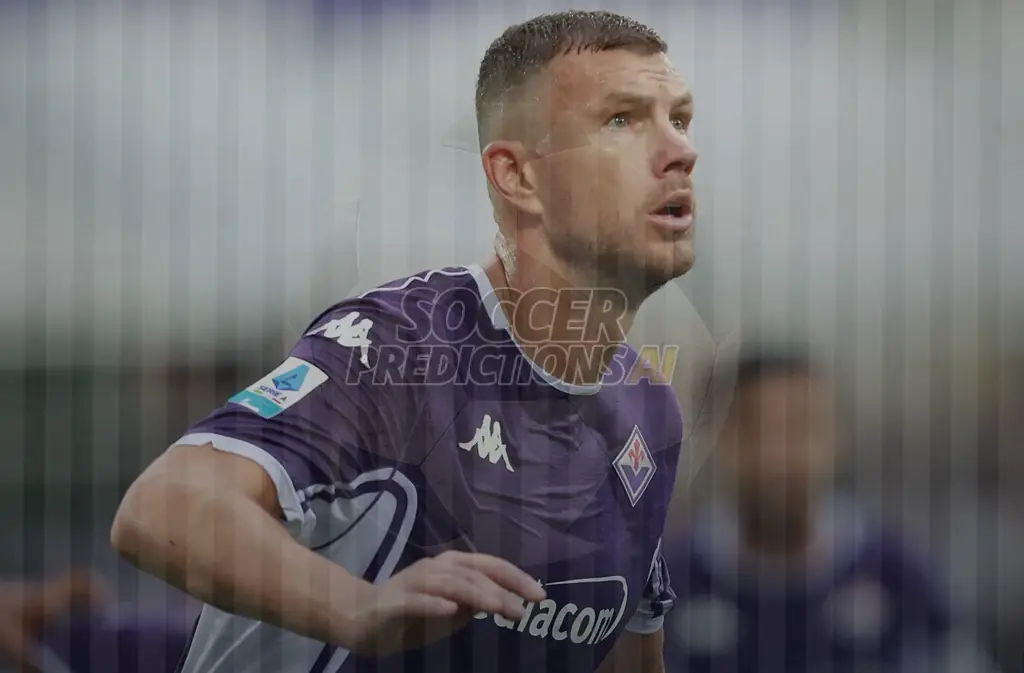
Schalke 04 have strengthened their squad with Edin Dzeko, aged thirty-nine. The former star striker is expected to help the traditional German club win promotion to the Bundesliga.
Schalke have moved decisively in the winter window by bringing in Edin Dzeko, a signing designed to turn a strong promotion push into a full-blooded promotion campaign.
The club have presented the Bosnian striker as a statement addition, not just because of his name, but because of what he represents: proven elite-level experience, leadership in high-pressure environments, and a forward profile that can decide tight matches when the season moves into its decisive stretch.
Dzeko arrives from Fiorentina after a campaign in which he has featured regularly in Serie A but has not found the net. Even so, the context around the transfer suggests the move is less about Fiorentina losing faith in his ability and more about squad management and economics. The Italian club were reportedly willing to cooperate with an exit in order to remove a significant salary from the wage bill, a common reality for teams balancing financial constraints with the need to refresh their squads. For Schalke, that created an opening to secure an experienced striker without the sort of prolonged negotiation that often comes with a player of Dzeko’s profile.
For the player, the decision appears to have been straightforward. Dzeko, one of the most decorated forwards of his generation and the all-time leading scorer for Bosnia and Herzegovina, was said to be fully committed to the idea of joining Schalke. That is an important detail in itself. High-profile veterans do not always embrace a step down in division, even when the project is attractive. Schalke’s ability to persuade him suggests the pitch was strong and the role was clear: be a central figure in the push back to the Bundesliga, both on the pitch and in the dressing room.
The timing of the signing reflects Schalke’s current position and ambition. At the halfway point of the season, Die Königsblauen are leading the 2. Bundesliga and have opened up a four-point cushion over second-placed Elversberg. From a sporting perspective, that is the ideal platform from which to strengthen. Clubs who wait until they slip often find the market more competitive and the choices more limited. Schalke, by acting from a position of strength, are signaling they intend to stay ahead, not simply react to pressure from behind.
That intent matters because Schalke’s recent years have been defined by turbulence. The club’s fall from the Bundesliga, combined with financial strain and inconsistent sporting direction, damaged both confidence and stability. Even when results improved, the weight of expectation around a “traditional club” made every setback feel larger. Being top at this stage of the season is a significant achievement, but it is not a guarantee. Promotion races can tighten quickly due to injuries, fixture congestion, form swings, and the psychological pressure that builds when a club knows it is expected to go up.
Dzeko’s arrival is designed to address exactly those points of vulnerability. A promotion leader is often built on consistency, efficiency, and the ability to win when playing below your best. That is typically where an experienced striker becomes invaluable. A forward who has seen title races, knockout rounds, and difficult away stadiums can provide calm in moments where younger squads lose composure. In practical terms, Dzeko also offers a different kind of attacking reference: a centre-forward who can hold up play, link with runners, and add threat in the box, especially against deep blocks that frequently appear in the second tier when teams choose to defend first against the league leaders.
Sporting director Youri Mulder made it clear that Schalke were not chasing a name for marketing reasons. His comments framed the signing as a targeted sporting move. He emphasised that Dzeko, from the first contact, showed immediate enthusiasm for the club and the project, which is a key factor in winter signings. Mulder also highlighted two priorities: leadership and goals. Schalke are not just buying a striker to score; they are adding a figure whose presence can shape standards, training intensity, and in-game mentality.
From a tactical perspective, the signing also gives Schalke more options. In a league where matches can become physical and transitions are frequent, having a striker who can occupy centre-backs and bring midfielders into play can improve overall structure. It can also support the development of the players around him, particularly wingers and attacking midfielders who benefit from a reliable focal point. Dzeko’s presence may reduce the burden on Schalke’s other forwards, allowing the team to distribute goals more effectively and avoid over-reliance on one or two contributors.
There is, of course, a narrative element too. Dzeko’s personal story links naturally to Germany. His international breakthrough came in the Bundesliga with Wolfsburg, where he won the league title and produced a striking scoring record. That period remains one of the defining chapters of his career and built the platform for his move to Manchester City. At City he won two league titles and developed a reputation as a striker capable of delivering in key moments, whether starting or coming off the bench, often with limited time to impact a match.
His later years also underline why Schalke believe he can still be a difference-maker. He remained a relevant figure at major clubs across top leagues, including Roma, Inter, Fenerbahçe, and Fiorentina, environments where pressure and expectation are constant. That sort of experience tends to translate well into a promotion race, where the emotional demands are as significant as the technical ones.
The biggest question will be physical management. At his age, the expectation cannot be that he plays every minute or carries the attack alone. Schalke will likely need to deploy him intelligently, picking the right matches, managing load, and using him as a decisive weapon in games where small margins define outcomes. If handled well, he can be a force multiplier rather than a risk. And if Schalke can integrate him quickly, his impact may be felt not only in goals but also in the confidence of the group, the clarity of attacking patterns, and the belief that the club is moving decisively back towards where it feels it belongs.
In short, Schalke’s message with this signing is simple: they are not content with being top at the halfway stage. They want to finish the job. Dzeko is being brought in to increase certainty, provide leadership, and give Schalke a proven finisher for the toughest part of the season, when promotion is no longer a concept, but a weekly test of nerve.