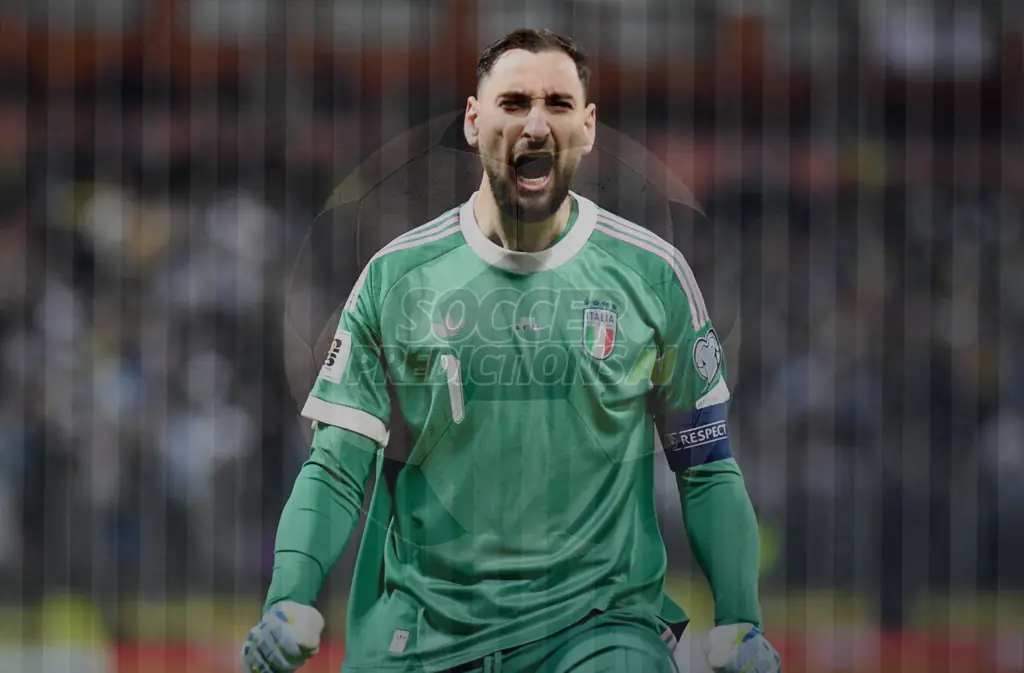
Italy’s latest World Cup qualifying failure sparked fresh controversy after Donnarumma denied claims that players had asked for a bonus before the decisive defeat.
Italy under fire again as Donnarumma rejects bonus claims after another World Cup disaster
Italy failure to qualify for the World Cup for a third straight time has opened another deep wound in one of football most decorated nations, and the fallout has quickly gone far beyond the result itself. What was already a painful sporting collapse has now turned into a wider controversy after a report from La Repubblica claimed that, before the decisive play off, a group of players had allegedly asked for a bonus of 300000 euros if the national team secured qualification for the final tournament.
The figure, which would have worked out at around 10000 euros per player, immediately caused outrage in Italy. The timing of the report made it even more explosive. The national team had just suffered another humiliating failure, this time losing on penalties in Bosnia and Herzegovina in the play off final, and public frustration was already at boiling point. In that climate, any suggestion that the players had been discussing money before such a crucial match was always going to provoke a fierce reaction.
It was not just because of the amount itself. In modern football, players at elite level are often associated with very large salaries, major sponsorships and bonuses tied to results. The real problem was what the story seemed to imply. To many supporters, it created the image of a disconnected group, one more concerned with financial reward than with the responsibility of wearing the Italy shirt in one of the most important matches in recent national team history. In a country where the national side still carries enormous symbolic weight, that kind of accusation hits hard.
Gianluigi Donnarumma moved quickly to respond, and his reaction made clear just how seriously he took the matter. The goalkeeper, who is not only one of the most recognisable faces in the squad but also the captain, said the report hurt him deeply. His words were direct and emotional. He insisted that, as captain, he had never asked the federation for a single euro and made it clear that no player had requested money in exchange for qualification.
According to Donnarumma, what happened was far less dramatic than the report suggested. He explained that the federation routinely offers bonuses linked to qualifying for tournaments or winning certain competitions, and that this is standard practice rather than the result of players making demands. In his version of events, there was no special request, no negotiation and no attempt by the squad to extract money before a decisive match. The real reward, he stressed, would simply have been reaching the World Cup.
That part of his response mattered because it tried to shift the discussion away from scandal and back toward normal football administration. National federations often do have bonus structures in place, especially for major tournaments, and those arrangements are not unusual in elite international football. But this was never going to be a calm or technical debate in Italy. The emotional state of the country after another failed qualification means every detail is being viewed through the lens of disappointment, anger and embarrassment.
And that is the bigger issue. This latest failure is not being treated as an isolated accident. It feels like part of a much deeper crisis. Italy are not supposed to be absent from the World Cup, let alone absent again and again. This is a national team with a huge history, multiple world titles and a football identity that has shaped generations. Missing one World Cup was already traumatic. Missing a second in a row was almost unthinkable. Failing for a third consecutive time has pushed the discussion into much darker territory.
That is why Donnarumma words about pain and responsibility sounded so important. He admitted that the days after the defeat were extremely hard, not only for the players but for all Italians. He spoke openly about how difficult it was to process what had happened and how much it hurt. There was no attempt to pretend that the squad could quickly move on without emotional damage. On the contrary, his tone suggested a dressing room that fully understands the weight of the failure and the anger now surrounding it.
At the same time, his comments also tried to introduce a message of recovery. He acknowledged that the team has to accept what happened and react. In his view, there is no other option. Italy have 4 years until the next World Cup 2026, but before then there are other important targets, including the European Championship and the Nations League. Those competitions now become crucial, not only in sporting terms but also psychologically. The team needs results, but it also needs to rebuild trust, credibility and pride.
That may prove even harder than it sounds. When a national team disappoints repeatedly, the damage is not limited to results on the pitch. It affects the relationship between players and supporters. It changes the tone of media coverage. It creates suspicion around every decision, every selection and every rumour. Even when players speak honestly, as Donnarumma appeared to do, there is already so much bitterness around the team that every statement is examined with doubt.
Still, there was one part of his response that felt especially significant. He said it was normal for the players to feel somewhat responsible for what is happening now. That line matters because it shows an awareness of the scale of the failure. He did not try to hide behind excuses or distance the squad from the consequences. He recognised that the group must carry part of the burden, even if there are wider structural problems around Italian football that also need to be addressed.
For Italy, the challenge now is twofold. The first is to deal with the immediate scandal and the noise created by the bonus report. The second, and far more important, is to confront the reality of another World Cup absence and everything that it says about the current state of the national team. Donnarumma clearly wants the discussion to focus on reaction rather than rumour, on rebuilding rather than accusation. But after a collapse of this size, calming the storm will not be easy.
What is certain is that the mood around the Azzurri has become one of frustration, hurt and disbelief. Another World Cup will take place without Italy, and that remains the central fact behind everything else. The argument over bonuses has added another layer of controversy, but it is the sporting failure that continues to define the moment. For Donnarumma and the rest of the squad, the pressure now is not just to explain what happened, but to prove that this fallen giant can still find a way back.