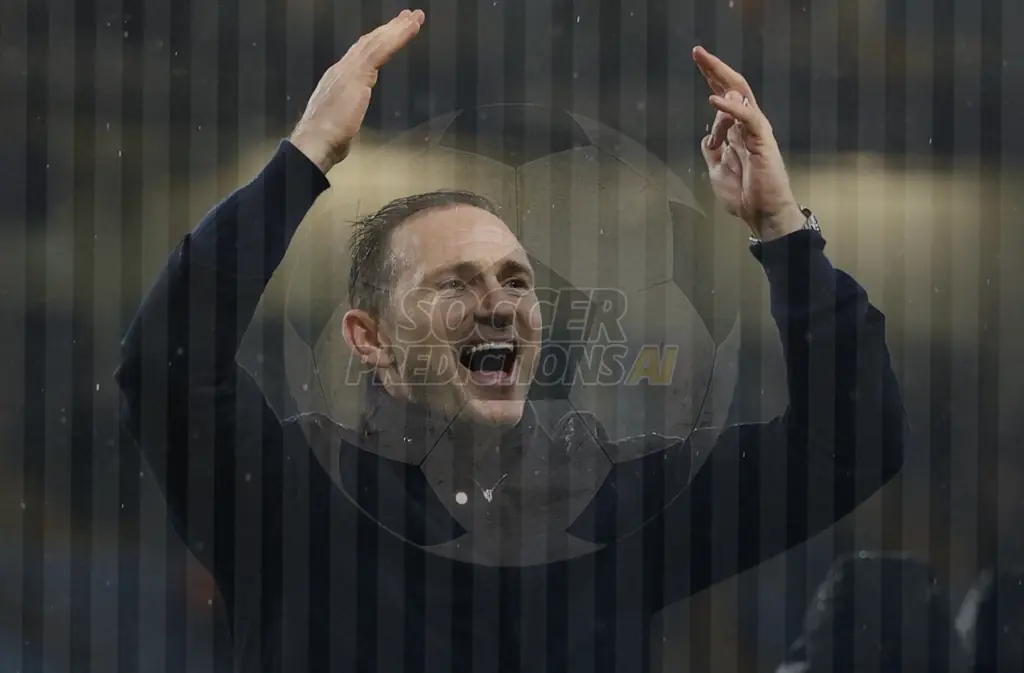
Frank Lampard is being linked with a return to Chelsea after leading Coventry to the Championship title and promotion to the Premier League.
Coventry owner plays down Chelsea links as Frank Lampard future becomes one of the stories of the summer
Frank Lampard has once again found himself at the centre of Chelsea speculation after guiding Coventry City to one of the most memorable achievements in the club recent history. By winning the Championship title and sealing promotion to the Premier League, Lampard has transformed the mood around Coventry and restored belief at a club that had spent more than 25 years away from the top flight. That success has not gone unnoticed. In the days following Chelsea decision to dismiss Liam Rosenior, the former England midfielder has quickly emerged as one of the names being discussed as a possible candidate for a return to Stamford Bridge, a place where his history as both player and manager continues to keep him firmly in the public conversation whenever the job becomes available.
Lampard is no stranger to Chelsea, of course. His deep connection to the club guarantees that any vacancy in the dugout will almost immediately bring his name back into the debate. He has already managed the Blues in 2 separate spells, first between 2019 and 2021, and then later as interim boss at the end of the 2022/23 season. Those experiences gave him direct knowledge of the demands, pressures and expectations that come with leading one of the biggest clubs in English football. Whether that history works in his favour or against him depends on perspective, but what is beyond dispute is that his work at Coventry has rebuilt his reputation in a major way. He is no longer being discussed only because of his past at Chelsea. He is being discussed because he has just delivered a major success.
The wider managerial picture at Chelsea only adds more intrigue to the situation. British media reports have put forward several possible contenders, with Lampard mentioned alongside Andoni Iraola, who is expected to leave Bournemouth, and Xabi Alonso, who is reportedly available. There has also been talk of admiration for Cesc Fabregas at Como and Francesco Farioli at FC Porto. That list reflects the uncertainty around Chelsea direction and also highlights how open the race may still be. In such moments, reputation, recent results, tactical profile and emotional connection all begin to matter. Lampard can certainly offer the emotional connection. What he now also has, thanks to his time at Coventry, is fresh evidence that he can build momentum and guide a team to tangible success.
Even so, Coventry owner Doug King has made it clear that he is not allowing himself to be consumed by the noise. Speaking to the BBC, he adopted a calm and measured tone when asked about the possibility of losing Lampard this summer. Rather than sounding defensive or anxious, King seemed to accept that such speculation is the natural consequence of a season that has gone so well. From his point of view, when a manager leads a club to promotion and finishes the campaign as a champion, it is only normal that larger clubs begin to circle. That is the price of success, and it is also a sign that the work being done has genuine value.
His praise for Lampard was emphatic and revealing. King described the last 18 months as incredible, both for the club and for the manager himself, and suggested that Lampard is still processing the scale of what he has achieved. That point matters because Coventry rise has not been framed as a routine promotion won by a financially dominant side. King specifically underlined the difficulty of becoming champions without parachute payments, stressing that Lampard had led the club out of a fiercely competitive division despite not having the financial support that often gives relegated Premier League teams a significant advantage. In other words, this was not merely a promotion. In the eyes of the Coventry hierarchy, it was a major managerial accomplishment built on coaching, organisation and belief rather than economic superiority.
That is why King comments carried more weight than a standard public show of support. He was not simply defending his manager from rumours. He was explaining why Lampard achievement deserves real respect. To come through the Championship as champions is difficult in any context, but to do it from Coventry starting point, without the benefits that some rivals enjoy, has been presented internally as proof of a very high level of work. King also made the broader point that the managerial market has become unstable and often chaotic, with clubs changing coaches at a rate that he clearly does not admire. His disappointment at seeing some teams appoint 3 or 4 managers in a single season was a quiet but pointed reflection on the modern game. Coventry, by contrast, do not want to live in that kind of instability. From his perspective, frequent change is usually a sign that something has already gone wrong.
There was also a personal tone to what King said about Lampard current state of mind. He insisted that the manager is in a happy place and suggested that the emotional connection between Lampard and the city of Coventry is obvious to anyone watching closely. That detail should not be dismissed lightly. Managers often speak about projects, long term plans and club culture, but genuine emotional investment can be harder to find. King view is that Lampard has developed exactly that kind of connection, and that promotion to the Premier League, followed by the Championship title, meant something real to him on a personal level. Those comments were designed not only to praise Lampard but also to signal that Coventry believe they have created an environment in which he feels fulfilled.
Of course, even King admitted that football does not always allow happiness to settle into certainty. He openly recognised that an impressive offer could arrive in the summer and that Lampard would then have decisions to make. That acknowledgement gave his comments credibility. He did not try to pretend that the situation is fully under control or that outside interest can simply be ignored. Instead, he accepted the basic reality of the sport: when a coach performs at a high level, bigger clubs may come calling. The key point, though, was that King refused to let that possibility overshadow what Coventry have just achieved. His message was simple. Right now, Lampard is happy, the club is happy and there is no desire to waste energy worrying about scenarios that may never happen.
From Chelsea point of view, Lampard candidacy would inevitably provoke strong opinions. There will always be supporters who see him as one of the club great figures and who would welcome the idea of a return, especially after what he has just accomplished at Coventry. There will also be others who feel Chelsea need to move in a completely different direction, perhaps towards a manager with a more distinct tactical identity or a stronger record at the very highest level of club football. That tension is part of what makes Lampard such a fascinating name in the discussion. He is not just another available coach. He is a former captain, a club legend and someone whose relationship with Chelsea guarantees a reaction.
At the same time, his Coventry success has changed the context around him. The conversation is no longer only about sentiment or nostalgia. It is now also about whether he has matured as a coach, learned from previous experiences and positioned himself for another opportunity at the top end of the game. Winning promotion and taking Coventry back into the Premier League after more than 25 years away is the kind of achievement that naturally strengthens that argument. It suggests growth, resilience and an ability to lead a group through sustained pressure. Those are qualities that matter at any level, but especially at a club where scrutiny is constant and patience is usually limited.
The timing of all this makes it even more compelling. Chelsea are again looking for direction, again trying to identify the right figure to lead the project forward, and again doing so under the glare of enormous public attention. Lampard, meanwhile, has just completed the kind of season that forces his name back into elite conversations. Coventry, understandably, want to enjoy the success rather than immediately defend themselves from the next wave of speculation. But that is not always how football works. Success creates attention, attention creates rumours and rumours create pressure. Whether Lampard stays or goes, that cycle is already well underway.
For now, Doug King has chosen reassurance over panic. His tone has been one of pride rather than fear, and perhaps that tells its own story. Coventry know what they have achieved. They know what Lampard has given them. They also know that if the football world is suddenly linking their manager with one of the biggest jobs in the country, it is because the last 18 months have changed the way he is viewed. That in itself is a measure of progress. The uncertainty may continue through the summer, but at this moment Coventry are in a position of strength, celebrating promotion, enjoying a title win and watching their manager receive recognition at the highest level.
Whether Chelsea ultimately move in Lampard direction or choose another name remains to be seen. What is already clear is that his work at Coventry has re established him as a serious figure in the managerial landscape. And while Doug King may not be able to control what happens next, he has made one thing very clear: Coventry are not dwelling on the rumours, and they are not ready to let the story move on from what has just been a remarkable season.