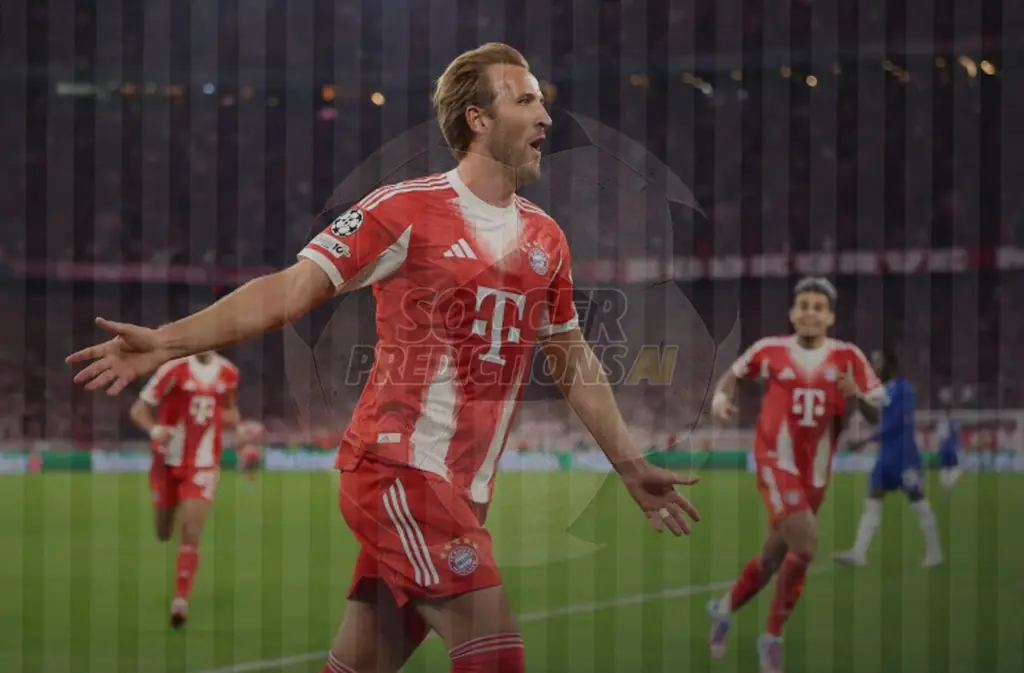
Harry Kane is having an incredible season. The Bayern Munich striker has already scored 55 times in 48 official matches. Kane can still chase several records in the remainder of the season, but a first Champions League triumph will not come after the elimination against Paris Saint-Germain.
Kane keeps scoring, but Champions League pain remains after Bayern exit
Harry Kane is producing one of the most remarkable individual seasons of his career, but once again the biggest European prize has slipped away. Bayern Munich drew 1-1 with Paris Saint-Germain, yet the result was not enough to send the German club into the Champions League final. For Kane, the night brought another goal, another record-equalling moment and another painful reminder that individual brilliance does not always lead to collective glory.
The England captain found the net in stoppage time, showing once again the instinct that has defined his season. Even in a match where Bayern were running out of ideas and time, Kane remained dangerous until the final moments. His goal against PSG meant he had scored in 6 consecutive Champions League knockout matches, equalling the mark set by Cristiano Ronaldo in the 2012-13 season. It is an achievement that underlines his consistency at the highest level, especially in the most demanding stage of the competition.
But the emotion after the final whistle was not pride. It was frustration. Kane had done his job again, yet Bayern were out. The scoreboard showed 1-1, the record books gained another entry for the striker, but the dream of lifting the Champions League disappeared for another year. For a player who moved to Bayern Munich with the clear ambition of winning major trophies, that makes the disappointment even heavier.
Kane spoke with clear sadness after the match and admitted that the elimination was difficult to accept. He said he was very disappointed and stressed that Bayern had been very close this season. The striker also made it clear that the squad believed it had the quality to fight for every trophy available. That belief is exactly why the defeat hurt so much. Bayern did not feel like a team that had been far away from the required level. They felt like a team that had been close enough to imagine the final, close enough to believe, and close enough for the exit to feel cruel.
For Kane, this Champions League campaign will leave mixed feelings. On one hand, he again proved that he belongs among the elite forwards in world football. His scoring record is extraordinary, his influence in the final third remains enormous and his ability to decide matches has not faded. On the other hand, he is now part of a list no player truly wants to dominate: the highest Champions League scorers who have still never won the trophy.
Kane now has 54 Champions League goals without lifting the competition. That places him third in that particular ranking, behind Ruud van Nistelrooij, who scored 60, and Kylian Mbappe, who has 70. It is a strange and painful category. It recognises greatness, but also highlights what is missing. To score that many goals in the Champions League is a sign of world-class quality. To do it without winning the trophy is a reminder of how difficult the competition is, even for the very best players.
The comparison with Van Nistelrooij and Mbappe shows the complicated nature of European legacy. Goals matter, records matter and consistency matters, but the Champions League is often judged by medals. Kane has already built a career full of goals, leadership and individual excellence. Yet until he wins the biggest club trophy in Europe, this discussion will continue to follow him. Every elimination adds another line to the same story.
That is why the PSG match felt so significant. Bayern did not just lose a place in the final. Kane lost another opportunity to change the wider conversation around his career. He is no longer a young striker waiting for his first big chance. He is an established superstar, a captain, a record hunter and one of the most complete centre forwards of his generation. At this stage, every season carries extra weight.
His move to Bayern was supposed to bring him closer to the trophies that had escaped him in England. Bayern are a club built to win, especially domestically, and are expected to compete deep into the Champions League every year. Kane has adapted almost perfectly from an individual point of view. He has scored relentlessly, linked play intelligently and carried himself like a leader from the first months in Germany. But football does not always reward adaptation immediately. The Champions League, in particular, rarely follows the most convenient script.
The cruel part for Bayern is that Kane has given them exactly what they wanted when they signed him. He has delivered goals in league matches, cup matches and Champions League nights. He has become the central reference point of the attack and has added a level of reliability that only the very best strikers can provide. With 55 goals in 48 official matches, his season is not merely good. It is historic.
That total has already allowed him to equal Robert Lewandowski record for most goals by a Bayern player in a single season. Lewandowski set standards in Munich that many believed would be almost impossible to match. For Kane to reach that level so quickly says everything about his quality and mentality. He did not need years to adjust to the Bundesliga or to the tactical demands of Bayern. He arrived, settled and started scoring at an astonishing pace.
Now, Kane has 3 matches left to become the outright record holder. Bayern still face Wolfsburg away, FC Koln at home and VfB Stuttgart at home in the DFB Pokal final. Those fixtures now carry an additional personal storyline. The Champions League is gone, but the chance to stand alone above Lewandowski remains alive. For a striker as driven as Kane, that target will matter.
Still, there is a difference between chasing a record and healing a European disappointment. Breaking the Bayern single-season scoring record would be a huge achievement and would further strengthen the argument that Kane has produced one of the finest debut campaigns in the history of the club. But it will not completely remove the pain of falling short in the Champions League. Records can decorate a season. Trophies define it.
The upcoming DFB Pokal final against VfB Stuttgart now becomes even more important for that reason. Bayern need a response, and Kane needs a trophy moment. After the PSG elimination, the cup final is not just another match at the end of a long campaign. It is a chance to finish with silverware, to reward the goals, to give the supporters something tangible and to prevent the season from being remembered mainly for what slipped away.
Kane himself tried to point the conversation forward. He mentioned that Bayern have another match on Saturday and still have the cup final to play. That reaction reflects his professional instinct. Elite players cannot remain trapped in disappointment for too long, especially when the calendar offers no pause. The emotional wound may still be fresh, but the next challenge arrives immediately.
That is one of the hardest parts of modern football. A Champions League elimination can feel like the end of the world for supporters, but the players must return to training, recover physically and prepare for the next fixture. For Kane, that means turning the frustration into motivation. He has done that many times in his career. The question is whether Bayern as a team can do the same.
The PSG tie will also raise questions about Bayern wider direction. When a striker scores as often as Kane has and the team still falls short in Europe, the debate naturally moves beyond the centre forward. Bayern must look at their defensive balance, midfield control, squad depth and ability to manage decisive moments. Kane can finish chances, lead the line and deliver goals, but he cannot solve every structural problem alone.
Against PSG, Bayern needed more than a late Kane goal. They needed control earlier in the match, sharper decision-making and a clearer route to breaking down one of the most dangerous teams in Europe. The fact that Kane scored again only reinforces the feeling that the team had enough attacking quality to make the difference. The frustration comes from knowing that the decisive details went elsewhere.
For PSG, the result represents resilience and tactical success. For Bayern, it is another night of regret. For Kane, it is both personal achievement and personal pain. That contrast has followed him through much of his career. He has often done everything expected from a striker and still watched the biggest prizes move out of reach. At Bayern, he hoped that pattern would change quickly. It still might, but not in this Champions League season.
There is also a broader legacy question. Kane is already one of the greatest goalscorers of his era. His numbers for club and country place him among the elite. Yet football history often simplifies careers into trophies and iconic moments. That can be unfair, but it is part of the sport. Kane knows that better than most. Every goal strengthens his case as a legendary striker, but every missed trophy opportunity keeps one argument open.
That is why the final weeks of the season are so important. If Kane breaks the Bayern record and wins the DFB Pokal, the campaign will still have a powerful ending. It would not erase the Champions League exit, but it would give his season a historic individual mark and a collective reward. If Bayern fall short again, the 55 goals could feel strangely incomplete, admired but surrounded by disappointment.
What cannot be questioned is Kane level of performance. Scoring 55 times in 48 matches is an absurd return at any club, in any league and under any pressure. Doing it in a first season at Bayern, while carrying enormous expectations, makes it even more impressive. He has not hidden from the responsibility. He has embraced it.
The challenge now is emotional as much as sporting. Bayern must move from European pain to domestic focus. Kane must move from disappointment to record pursuit. The supporters must move from frustration to belief, at least for the final matches. That is not easy after a Champions League exit, especially one in which the team felt close. But the season is not over.
Kane still has something to chase. He can become the Bayern player with the most goals in a single season. He can help deliver the DFB Pokal. He can finish a painful week with a personal and collective response. None of that will change the fact that the Champions League dream is over, but it can still shape how this remarkable season is remembered.
For now, the image is familiar: Kane scoring, Kane setting records, Kane speaking with disappointment after a major European setback. It is a story full of brilliance and frustration. The goals keep coming, the records keep falling, but the Champions League trophy remains out of reach. That is the painful contradiction of his season. Harry Kane is playing like a record breaker, but he is still waiting for the night that finally turns all those goals into the one prize he wants most.