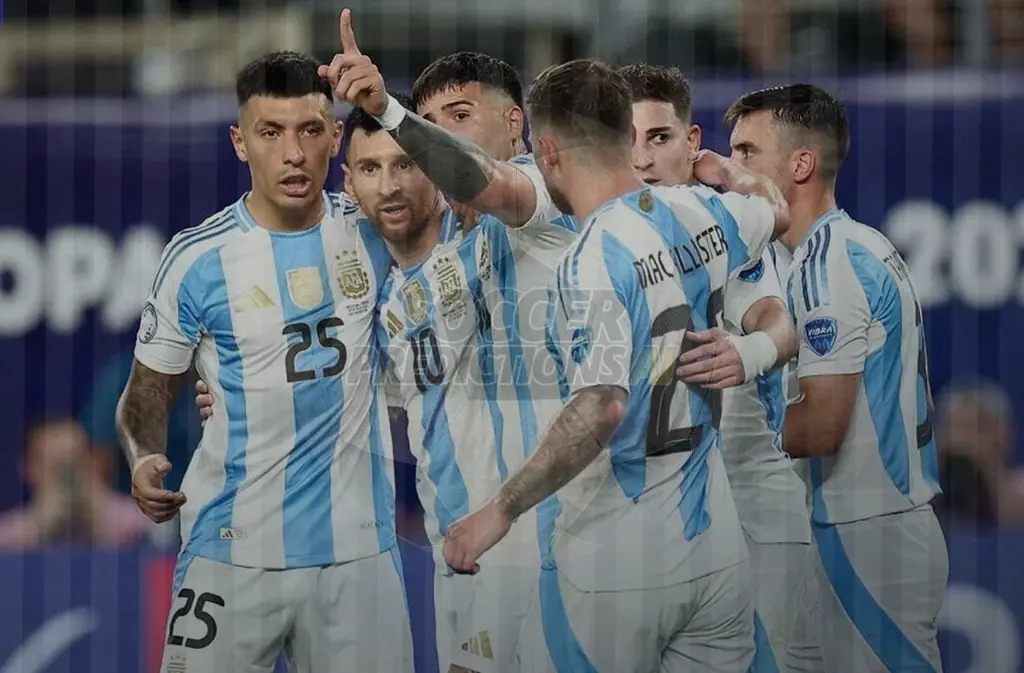
Argentina return to the top of the latest FIFA ranking as the 2026 World Cup begins in the United States, Canada and Mexico.
Portugal remain fifth in FIFA ranking as Argentina return to the top on World Cup opening day
The Portuguese national football team will begin the 2026 World Cup in 5th place in the FIFA ranking, after the latest update was released this Thursday, on the same day the tournament gets underway in the United States, Canada and Mexico.
For Portugal, the update confirms the position achieved in April, when the national side climbed to 5th place. The team of the quinas now enters the biggest tournament in world football among the highest-ranked nations on the planet, behind only Argentina, Spain, France and England.
The timing of the ranking update gives it added symbolic weight. With the World Cup starting this Thursday and running until July 19, the table offers a final snapshot of the international hierarchy before the competition begins. For Portugal, remaining in 5th place reinforces the idea that the team arrives at the tournament as one of the strongest contenders, even if the ranking alone does not decide anything on the pitch.
At the top of the standings, Argentina have returned to 1st place. The reigning world champions moved back above France, reversing what had happened in the previous update in April. France, beaten finalists at the 2022 World Cup, have dropped to 3rd place, while Spain remain 2nd after their European Championship triumph. England complete the top 4, keeping their position immediately ahead of Portugal.
The change between Argentina and France is the most significant movement near the top of the ranking. Argentina start the new World Cup cycle from a position of authority, still carrying the status of defending champions and once again officially recognised as the leading team in world football. France, despite falling to 3rd, remain firmly among the favourites, with one of the deepest squads in international football.
Spain’s position in 2nd place also confirms the strength of the European champions. After a period of renewal and tactical evolution, the Spanish team continue to be viewed as one of the most consistent sides in international football. England, in 4th, remain ahead of Portugal, maintaining their place among the elite group of nations expected to compete deep into the tournament.
Portugal’s 5th place is important not only as a statistical marker, but also as a reflection of the team’s consistency in recent years. The national team has remained close to the top of the international game, with a squad filled with experience, technical quality and options in almost every position. Entering a World Cup from this ranking position increases expectations, but also confirms the respect Portugal continues to command globally.
In the top 10, there was only one other change. Morocco moved ahead of the Netherlands to take 7th place, another sign of the continued rise of the North African team after its historic performances on the international stage. The Netherlands, meanwhile, fall one place but remain inside the top 10.
Portugal’s opponents in Group K of the 2026 World Cup all kept their positions in the ranking. Colombia remain in 13th place and are, on paper, the strongest opponent for Portugal in the group. DR Congo stay in 46th place, while Uzbekistan remain 50th.
The ranking positions underline the competitive profile of Portugal’s group. Colombia, ranked 13th, are a serious and experienced international side, capable of causing problems to any opponent. Their position shows that Portugal will not have an easy path, even as the highest-ranked team in the group. DR Congo and Uzbekistan may sit lower in the table, but both will arrive at the tournament with motivation and the opportunity to challenge expectations on the world stage.
For Portugal, the objective will be clear: justify the 5th place in the FIFA ranking with performances that match the team’s status. The ranking places Portugal among the leading nations before the tournament begins, but World Cups are rarely decided by reputation. They are shaped by form, preparation, tactical discipline, mental strength and the ability to manage pressure across several weeks.
The latest FIFA ranking also provides an interesting look at the position of Portuguese-speaking nations in world football. Excluding Brazil, who are 6th, Cape Verde remain the best-ranked Lusophone country. The Cape Verdean national team climbed to 67th place and will now prepare for a historic debut at the World Cup.
Cape Verde’s rise is one of the most remarkable stories among Portuguese-speaking nations. Reaching a World Cup for the first time is already a major achievement, but doing so while continuing to climb in the ranking adds even more importance to this moment. The country’s football has grown in visibility, competitiveness and ambition, and the 2026 World Cup will offer Cape Verde the biggest platform in its history.
Behind Cape Verde, Angola are ranked 88th, Mozambique sit 103rd, and Guinea-Bissau are 132nd. Further down the list, Macau appear in 193rd place, São Tomé and Príncipe are 195th under Portuguese coach Ricardo Monsanto, and Timor-Leste are 201st, coached by Zé Pedro.
These positions show the different stages of development across the Lusophone football landscape. While Portugal and Brazil remain established powers, Cape Verde’s rise gives the Portuguese-speaking world another story of progress at international level. For countries such as Angola, Mozambique and Guinea-Bissau, the ranking also serves as a reference point for future growth and competitive ambitions.
The Portuguese influence at the 2026 World Cup will not be limited to the national team. Carlos Queiroz will be the only Portuguese coach present at the tournament, leading Ghana, who are ranked 73rd. His presence adds another layer of Portuguese representation at the competition, given his long and varied career in international football.
Queiroz has extensive experience on the global stage, having worked with different national teams and taken part in several major tournaments. His Ghana side may not be among the highest-ranked teams, but the presence of an experienced coach can be important in a competition where preparation, organisation and tactical detail often make a decisive difference.
Elsewhere, Guinea, coached by Paulo Duarte, dropped to 81st place. Kuwait, managed by Hélio Sousa, moved in the opposite direction and climbed to 133rd. These movements highlight the continued presence of Portuguese coaches across international football, even outside the highest-profile national teams.
For Portugal, however, the main focus is now firmly on the World Cup. The ranking update confirms the national team’s strong position, but it also increases the responsibility. Being 5th in the world brings prestige, but it also means that every match will be judged against high expectations.
The tournament in the United States, Canada and Mexico will be a major test of Portugal’s ability to transform individual quality and international status into a sustained run on the pitch. The team will begin the competition with a favourable ranking, a strong squad and the ambition to go far, but the World Cup has repeatedly shown that no nation can rely on reputation alone.
Argentina’s return to 1st place, Spain’s continued strength, France’s presence among the favourites, England’s stability and Portugal’s place in the top 5 all help frame the competitive landscape before the opening matches. The ranking gives a clear indication of where the leading nations stand, but the real answers will come during the tournament.
Portugal will start the 2026 World Cup as the 5th-ranked team in the world. That is a position of respect, but also a challenge. From now until July 19, the task is simple to describe and difficult to achieve: prove on the pitch that the ranking reflects the team’s true level.