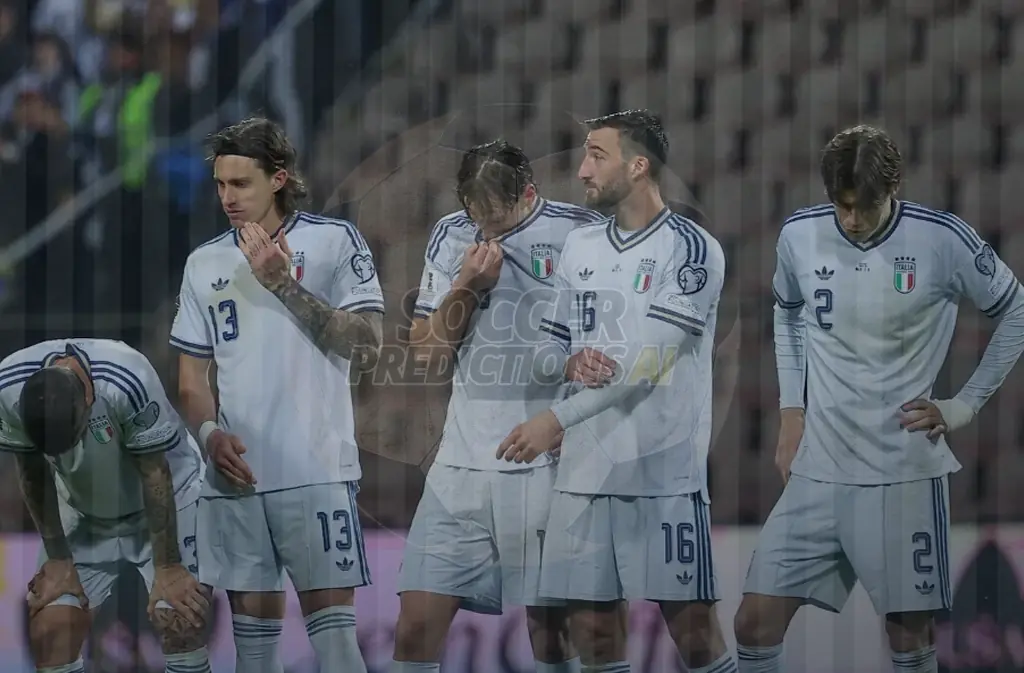
Italian football is in crisis after another World Cup failure, with Sports Minister Andrea Abodi calling for FIGC president Gabriele Gravina to resign.
Italian football in turmoil as minister calls for change after latest World Cup failure
Italian Sports Minister Andrea Abodi has openly called for the resignation of Italian Football Federation president Gabriele Gravina after Italy failed to qualify for the World Cup for the third consecutive time, deepening the sense of crisis around one of the most historic national teams in the game. The latest collapse, sealed by a playoff defeat to Bosnia and Herzegovina after a 1-1 draw following extra time and a 4-1 loss on penalties, has triggered a fierce political and sporting backlash, with pressure now growing rapidly on the leadership of the FIGC.
Abodi made his position clear in a strongly worded statement issued the day after the defeat, arguing that Italian football has reached a point where simple explanations or cosmetic adjustments are no longer enough. In his view, the problem is structural and demands major reform at the top of the federation. The minister said it is obvious to everyone that Italian football must be rebuilt, and he made clear that such a rebuilding process should include a renewal of the leadership of the FIGC, which has been headed by Gravina since 2018.
The intervention from the Italian government represents a major escalation in the fallout from Italys latest failure. Missing one World Cup is already considered traumatic for a country with the traditions and expectations of the Azzurri. Missing three in a row has now become an unprecedented national embarrassment. Italy, world champions in 1934, 1938, 1982 and 2006, have gone from being one of the defining powers of international football to a side repeatedly unable to get through qualification. For many in Italy, that decline can no longer be dismissed as bad luck or an isolated sporting disappointment. It is increasingly being treated as evidence of a much deeper institutional collapse.
Abodi was especially critical of the attempts to shift part of the blame onto the government. Gravina had made repeated references to obstacles faced by the federation and suggested that wider institutional difficulties had contributed to the current state of Italian football. Those remarks clearly angered the sports minister, who responded by defending the role of the state and rejecting any suggestion that public institutions should carry responsibility for the latest elimination. According to Abodi, the government has shown concrete commitment to the entire Italian sporting movement over several years, and it is objectively wrong to deny responsibility for a third straight World Cup failure by pointing toward supposed failings elsewhere.
That criticism matters because it goes beyond a reaction to a single match. It points to a growing conflict between political leaders and the football federation over accountability, governance and direction. Rather than allowing the federation to manage the aftermath internally, the government has now stepped directly into the debate, raising the stakes for Gravina and increasing the likelihood that the next days will be decisive for his future.
Abodi also acknowledged that the problems facing Italian football go far beyond one penalty shootout or one failed qualification campaign. He described the current situation as a deep and general crisis, one that requires broad reflection not only from the federation but also from Italian politics itself. That assessment reflects a wider concern in the country that the national team struggles are tied to more fundamental weaknesses in the football system, including player development, long term planning, competitiveness, administrative choices and the overall direction of the domestic game.
In an apparent attempt to get ahead of the criticism, Gravina has already called a federal council meeting for next week in order to assess the situation and take stock of what happened. That move suggests the FIGC is aware of the scale of the anger and the demand for answers. Still, the meeting is unlikely to calm the debate on its own. Political pressure is rising, sporting frustration is intense, and many observers now believe that a simple review will not satisfy a public that has watched the national team fall short again in one of the most important moments on the calendar.
On the pitch, the defeat itself only added to the sense of disbelief. Italy had been within reach of keeping their World Cup hopes alive, but once again they failed to finish the job and paid the price in the most painful way possible. Gennaro Gattuso, now the national team coach, apologised publicly after the loss and admitted the scale of the disappointment. Speaking after the match in Zenica, he said the team had not achieved its objective and described the outcome as a hard blow that is difficult to accept. He also tried to defend the players, saying they had surprised him with their determination and passion and that the team had fought hard after taking the lead.
Gattusos remarks captured the emotional state of the squad and staff in the immediate aftermath, but they also underlined the cruel repetition of the story. Italy have now fallen at the playoff stage three consecutive times. In qualification for the 2018 World Cup they were eliminated by Sweden. In the road to the 2022 tournament they fell to North Macedonia. Now Bosnia and Herzegovina have delivered the latest blow. Different opponents, different coaches and different circumstances, but the same final result. Italy are once again absent from the biggest tournament in world football.
That sequence makes the latest failure especially damaging. It is no longer a single generation falling short or one campaign going wrong. It is now a defining feature of the modern national team era, a pattern that has shattered confidence in the leadership of the federation and raised urgent questions about how a country with such history can continue to fail on the international stage. For supporters, former players and political figures alike, the repeated nature of the collapse makes it even harder to defend the existing structure.
The spotlight now turns firmly to Gravina and to what happens next inside the FIGC. He remains at the centre of a storm that is no longer limited to football. With the sports minister openly calling for change and the public mood turning increasingly hostile, the federation president faces the most serious challenge of his tenure. The coming council meeting may clarify the official response, but it is already clear that the debate has moved beyond a simple post match analysis. Italy is not only dealing with another failed qualification campaign. It is confronting a crisis of leadership, credibility and identity in its national game.
For a country that once measured itself against the very best in world football, the current reality is a brutal one. The Azzurri are out of the World Cup again, the federation is under attack, the government is demanding accountability, and Italian football finds itself at a crossroads. Whether that leads to genuine reconstruction or merely another cycle of blame and frustration will now depend on the decisions made in the days ahead.