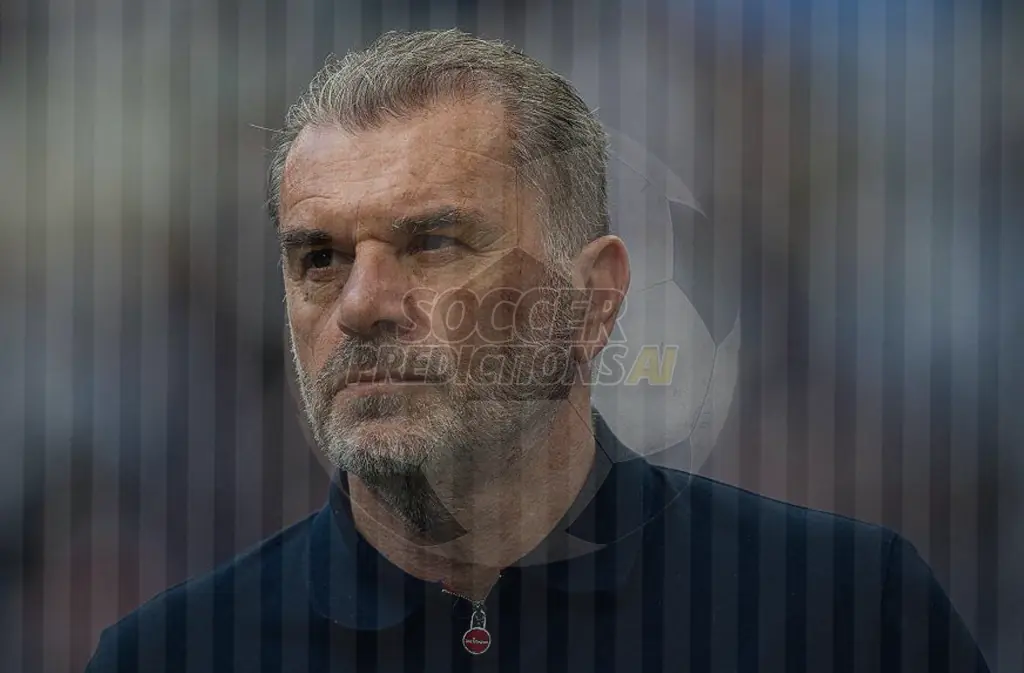
Tottenham Hotspur parted ways with Thomas Frank after the home defeat against Newcastle United. Ange Postecoglou, Frank’s predecessor, appeared on The Overlap podcast and criticised the policy of his former employer. It is hard to understand what they are actually trying to build.
Tottenham Hotspur made a swift decision after the home defeat against Newcastle United, parting ways with Thomas Frank only months after he arrived.
The speed of the separation immediately raised questions about what Spurs are trying to achieve, because changing coach again so quickly suggests a club still stuck between long term planning and short term pressure.
Those doubts were reinforced by Ange Postecoglou, who spoke openly on The Overlap in a conversation with Ian Wright and Gary Neville. Postecoglou did not sound shocked by the news around Frank. Instead, he used it as another example of what he sees as a contradiction at the heart of Tottenham: a club that talks like it wants to be among the elite, but often behaves like it is unwilling to take the decisive steps required to get there.
Postecoglou focused on the gap between the message Tottenham pushes and the decisions it makes. He pointed to the famous club motto, To Dare Is To Do, describing how it is displayed throughout the environment. But in his view, the club frequently acts in a way that feels cautious, limited, and at times the opposite of what the slogan implies. That disconnect, he argued, makes it difficult to understand what Tottenham are actually building and what their real identity is supposed to be.
He framed the issue as an identity problem rather than a single manager problem. Spurs have an outstanding stadium, top class training facilities, and all the external markers of a major club. Yet Postecoglou argued that the key measure of a truly big club is not the size of the stadium or the quality of the facilities. It is the consistent ability to invest at the level needed to compete for top honours, especially through the wage structure and the readiness to secure top targets.
From his perspective, Tottenham were trying to operate like a club that expects Champions League level outcomes, while not always backing that expectation with the financial aggression usually seen from the biggest sides. He specifically mentioned the wage situation as a signal. If the wage structure is not set up to attract and keep elite level players, then the club can look impressive on the outside but remain limited on the pitch.
That argument tied directly into recruitment. Postecoglou explained that he wanted players who could lift the team immediately and push them into real contention. He mentioned names like Pedro Neto, Bryan Mbeumo, Antoine Semenyo and Marc Guehi, presenting them as examples of the level of signing he believed Tottenham needed to shift from competing near the top to genuinely challenging for trophies.
According to Postecoglou, Tottenham could not make those deals happen financially. Instead, the club ended up bringing in Dominic Solanke and three teenage signings. He made clear he rates Solanke and likes him as a player, but he described the overall direction as frustrating because it did not match the ambition that was being communicated publicly.
The central point he made is about timing and competitive steps. If you are finishing around fifth and want to move to first, you generally need proven starters who can change games now. Young signings can be a smart long term investment, but teenagers rarely move a team several places up the table in the short term. In Postecoglou view, youth recruitment is fine as part of the plan, but it cannot be the main answer if the club is serious about climbing quickly from top five contention into title level performance.
He also suggested that the club messaging created expectations that were not aligned with the realities inside. He said the club presented itself as capable of competing on all fronts, but the transfer activity and the financial limits he encountered did not support that idea. For a manager, that matters because it shapes the job you are expected to do and the tools you are given to do it.
In that context, the short spell of Thomas Frank looks less like an isolated failure and more like another symptom of instability. A new manager arrives with a style and a plan, but the environment demands immediate results. When the squad is not built to fit the plan, when the club is trying to balance long term investment with immediate pressure, the runway becomes very short. A big defeat at home can quickly become the moment that ends the project.
Now Tottenham face the next big decision: who takes over and what direction they choose. The report notes that it is not yet known whether the replacement will be permanent or interim. John Heitinga is mentioned as a possible candidate, partly due to his connection as a former assistant to the Danish coach.
An interim solution might steady the ship short term, but it also highlights the uncertainty. Spurs need to decide whether they want a coach chosen for a specific football model and a long build, or a coach selected primarily for immediate results. Both options require alignment between club leadership, recruitment strategy, and the level of financial backing. Without that alignment, Tottenham risk repeating the same cycle: a new coach, a partial squad fit, rising expectations, and then another reset when results do not match the noise.
Postecoglou own recent experience also added weight to his comments. After leaving Spurs, he started the season as manager of Nottingham Forest but was dismissed within a few months. That detail reinforces how quickly football can turn, but it also shapes why his Spurs criticism lands the way it does: he presents himself as someone who has seen how clubs talk internally, how they act externally, and how quickly the story can change when results go against you.
For Tottenham supporters, the biggest question remains the one Postecoglou kept circling: what exactly are Spurs trying to be. A club with elite facilities and global reach can still struggle if it hesitates at the crucial moments in squad building and long term planning. Frank departure has pushed that conversation back to the front again, and the next appointment will be judged not only on results, but on whether it finally signals a coherent plan that matches the ambition Tottenham keep presenting to the outside world.