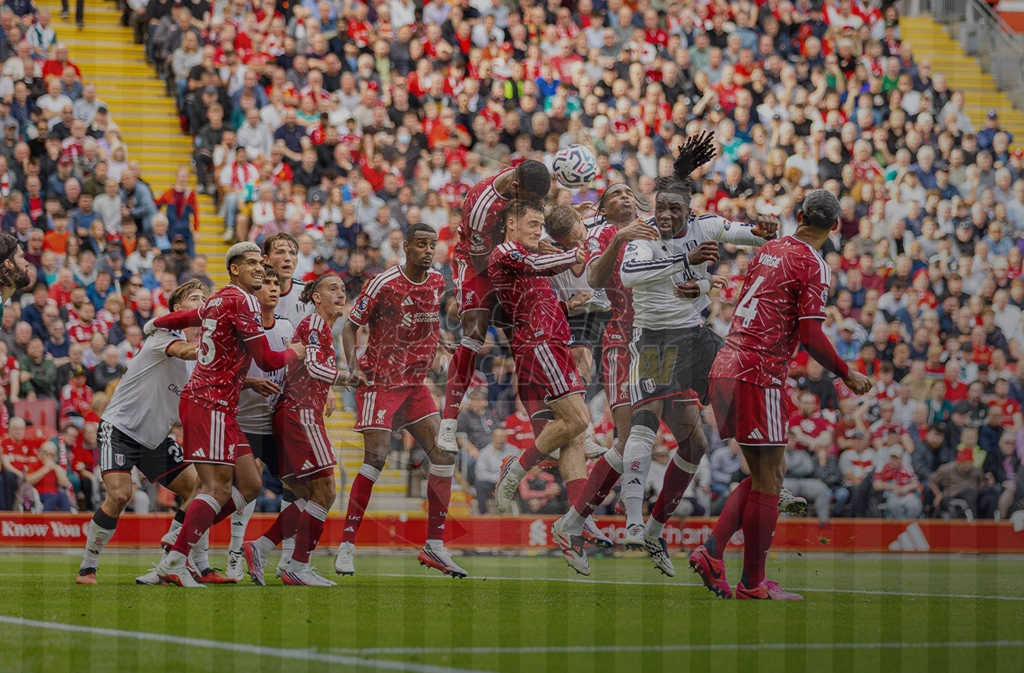
The fact that the Premier League is the competition in which teams cover the greatest average distance will probably not surprise many people. What is more remarkable is that even the most energetic teams in Spain, Italy and Germany run less than the “laziest” team in England.
Premier League teams dominate Europe in running distance
The Premier League has long been associated with a faster and more physically demanding style of football than many of Europe other major competitions, but the latest running-distance figures underline just how large that difference has become. English clubs do not simply dominate the top of the rankings. Even the Premier League team covering the least ground on average still runs farther per match than the most active sides in La Liga, Serie A and the Bundesliga. Arsenal lead the overall standings with an average of 118.7 kilometres per game, while Liverpool sit at the bottom of the English ranking with 110.3 kilometres. Remarkably, that Liverpool figure is still higher than the leading totals recorded in Spain, Italy and Germany.
The numbers offer an interesting picture of the physical demands placed on Premier League players. Arsenal are the most active team of all, averaging 118.7 kilometres, narrowly ahead of Fulham on 118.5 and Brentford on 117.5. Bournemouth and Crystal Palace complete the English top five with 115.4 and 115.2 kilometres respectively. The differences between the leading clubs are relatively small, but the wider pattern is much more striking. Ten Premier League sides average at least 114 kilometres per match, showing that high running volume is not limited to one tactical style or one section of the table.
Arsenal set the physical standard
Arsenal position at the top is particularly notable because their 118.7-kilometre average places them ahead of every club included in the comparison across Europe major leagues. Fulham are only 0.2 kilometres behind, while Brentford trail by just over one kilometre. Newcastle United, Ipswich Town, Sunderland and Leeds United are also comfortably above 114 kilometres, creating a broad cluster of English teams operating at a physical level that few clubs elsewhere in Europe are currently matching.
That does not necessarily mean that covering more ground automatically makes a team better. Running statistics need to be interpreted alongside tactical context, possession, pressing, defensive structure and the amount of time a team spends chasing the ball. A side with greater territorial control may sometimes cover less ground than an opponent forced to defend large areas, while another team may deliberately build its identity around constant pressing and repeated recovery runs. What the figures do show, however, is the extraordinary baseline physical requirement in England. Even teams towards the lower end of the Premier League ranking remain highly active compared with their counterparts in several other leading competitions.
Liverpool illustrate that point perfectly. With an average of 110.3 kilometres per game, they are the Premier League side covering the shortest distance, yet their figure would still be enough to lead La Liga, Serie A and the Bundesliga. Manchester City are only slightly higher at 111.2, Aston Villa average 111.5 and Manchester United 111.9. Even Coventry City, on 110.5 kilometres, remain above the highest averages registered in Spain, Italy and Germany.
Spain well behind Premier League levels
The contrast with La Liga is considerable. Celta Vigo are the most active Spanish team with an average of 107.1 kilometres per match, followed by Levante on 105.8, Elche on 105.6 and Valencia on 105.5. Barcelona complete the Spanish top five with 104.6 kilometres. That means Celta, despite covering more ground than any other La Liga side in the figures provided, still average 3.2 kilometres less than Liverpool, the lowest-ranked Premier League team.
The difference becomes even more striking when Arsenal are used as the reference point. The Gunners average 11.6 kilometres more per match than Celta Vigo. Over the course of a full season, if those averages remained similar, that would translate into an enormous cumulative difference in distance covered. Again, the figures should not be treated as a simple measure of quality, but they do highlight how differently matches can be played across competitions in terms of overall movement and physical output.
Barcelona presence on 104.6 kilometres is also interesting because it demonstrates that a team can achieve a very different running profile depending on how it controls matches. Their total sits far below every Premier League side, yet the figure alone does not explain how those kilometres are accumulated or the tactical purpose behind them. The comparison is therefore most useful as an indication of league-wide physical intensity rather than as a direct ranking of performance.
Serie A posts the lowest figures
Serie A produces even lower totals. Monza and Atalanta jointly lead the Italian ranking with 103.5 kilometres per match, followed by Torino on 102.9, Udinese on 102.1 and Internazionale on 101.5. Even the most active Italian teams are therefore almost seven kilometres behind Liverpool and more than 15 kilometres behind Arsenal.
The scale of that difference is one of the most surprising elements in the comparison. Serie A is traditionally associated with tactical discipline and structured positioning, and the running figures suggest that total distance covered is considerably lower than in England. That does not necessarily mean Italian players are working less intensely, since shorter explosive movements, pressing actions and tactical positioning are not fully described by total kilometres alone. Nevertheless, the raw averages clearly place the Italian competition at a very different level from the Premier League in terms of overall distance.
Atalanta, often associated with aggressive pressing and physically demanding football, average 103.5 kilometres according to the figures provided. Even that total would leave them comfortably below every English club in the table. Internazionale, at 101.5, sit even further behind, underlining how much tactical structure can influence movement patterns from one league to another.
Germany also falls short of English numbers
The Bundesliga comes closer than Spain and Italy but still remains below Premier League levels. Hoffenheim lead the German figures with 109.6 kilometres per match, followed by Bayern Munich on 108.2. Paderborn average 107.4, Schalke 04 are on 107.3 and VfB Stuttgart complete the top five with 107.2. Hoffenheim therefore come closest to matching Liverpool, but still fall 0.7 kilometres short of the Premier League lowest average.
That is especially notable because German football has frequently been associated with pressing, transitions and physically intense matches. Yet, based on these totals, not even the most active Bundesliga team reaches the distance covered by the least active Premier League side. Bayern, despite their 108.2-kilometre average, would also sit below Liverpool, Coventry, Manchester City and every other English club in the ranking.
France is the only competition that comes close
Ligue 1 is the exception. Stade Rennes average 114.2 kilometres per game, a figure that would place them around the middle of the Premier League ranking rather than at the bottom. Their total is level with Hull City and just below Brighton, meaning Rennes are the only side outside England in the data supplied that truly operates within the normal Premier League range. Le Mans also come relatively close with 110.8 kilometres, which would put them above Liverpool and Coventry City but below Manchester City.
Those two French teams stand out because the remainder of the Ligue 1 top five falls back towards the levels seen in Germany. Lyon average 109.9 kilometres, Lorient 109.5 and Troyes 108.9. France therefore shows much greater variation than the other competitions. Rennes in particular are an outlier, with a physical output comparable to many English teams, while most of the rest of the league remains below the Premier League baseline.
Eredivisie also remains far below
In the Netherlands, Excelsior are the leading side with 106.1 kilometres per game. ADO Den Haag follow with 105.6, Go Ahead average 105.1, PSV 104.1 and FC Groningen 103.8. Even Excelsior, despite being the most active Dutch team, cover 4.2 kilometres less per match than Liverpool and 12.6 kilometres less than Arsenal.
The Dutch figures therefore sit broadly in the same range as La Liga and Serie A rather than the Premier League. PSV, one of the country biggest clubs, average 104.1 kilometres, showing again that total running distance is not simply a reflection of status or quality. Teams with more possession and territorial dominance can often spend less time making long recovery runs, while clubs using aggressive pressing or transition-heavy approaches can generate much larger totals.
Average distance covered by Premier League teams
| Club | Distance per match |
|---|---|
| Arsenal | 118.7 km |
| Fulham | 118.5 km |
| Brentford | 117.5 km |
| Bournemouth | 115.4 km |
| Crystal Palace | 115.2 km |
| Newcastle United | 114.9 km |
| Ipswich Town | 114.8 km |
| Sunderland | 114.7 km |
| Leeds United | 114.6 km |
| Brighton | 114.3 km |
| Hull City | 114.2 km |
| Everton | 113.6 km |
| Chelsea | 113.6 km |
| Nottingham | 112.5 km |
| Tottenham | 112.1 km |
| Manchester United | 111.9 km |
| Aston Villa | 111.5 km |
| Manchester City | 111.2 km |
| Coventry City | 110.5 km |
| Liverpool | 110.3 km |
Leading teams in Spain, Italy, Germany, France and the Netherlands
| League | Club | Distance per match |
|---|---|---|
| La Liga | Celta Vigo | 107.1 km |
| La Liga | Levante | 105.8 km |
| La Liga | Elche | 105.6 km |
| La Liga | Valencia | 105.5 km |
| La Liga | Barcelona | 104.6 km |
| Serie A | Monza | 103.5 km |
| Serie A | Atalanta | 103.5 km |
| Serie A | Torino | 102.9 km |
| Serie A | Udinese | 102.1 km |
| Serie A | Internazionale | 101.5 km |
| Bundesliga | Hoffenheim | 109.6 km |
| Bundesliga | Bayern Munich | 108.2 km |
| Bundesliga | Paderborn | 107.4 km |
| Bundesliga | Schalke 04 | 107.3 km |
| Bundesliga | VfB Stuttgart | 107.2 km |
| Ligue 1 | Stade Rennes | 114.2 km |
| Ligue 1 | Le Mans | 110.8 km |
| Ligue 1 | Lyon | 109.9 km |
| Ligue 1 | Lorient | 109.5 km |
| Ligue 1 | Troyes | 108.9 km |
| Eredivisie | Excelsior | 106.1 km |
| Eredivisie | ADO Den Haag | 105.6 km |
| Eredivisie | Go Ahead | 105.1 km |
| Eredivisie | PSV | 104.1 km |
| Eredivisie | FC Groningen | 103.8 km |
Premier League sets a very different physical baseline
The most important conclusion from the figures is not simply that Arsenal run more than Barcelona, Bayern or Inter. It is that the entire Premier League appears to operate at a much higher running baseline. The gap between Arsenal and Liverpool inside England is 8.4 kilometres per match, yet Liverpool still outperform the leading clubs from three other major European leagues in total distance covered. That makes the English competition unusual not because of one or two exceptional teams, but because high physical output is spread across almost the entire league.
France comes closest to breaking that pattern thanks to Stade Rennes and, to a lesser extent, Le Mans. Rennes would fit comfortably into the Premier League mid-table in terms of running distance, while Le Mans would still sit above Liverpool. Outside those two examples, however, the pattern remains clear. The leading clubs in Spain, Germany, Italy and the Netherlands all fall below the English minimum.
The figures offer another explanation for why players arriving in the Premier League often speak about the pace and physical demands of English football. The difference is not only visible in tackles or high-speed transitions. It also appears in the total amount of ground teams are expected to cover over 90 minutes. Arsenal may currently set the benchmark at 118.7 kilometres, but the most remarkable statistic may actually belong to Liverpool: at 110.3 kilometres, the lowest Premier League average would still be enough to lead most of the other competitions included in the comparison.