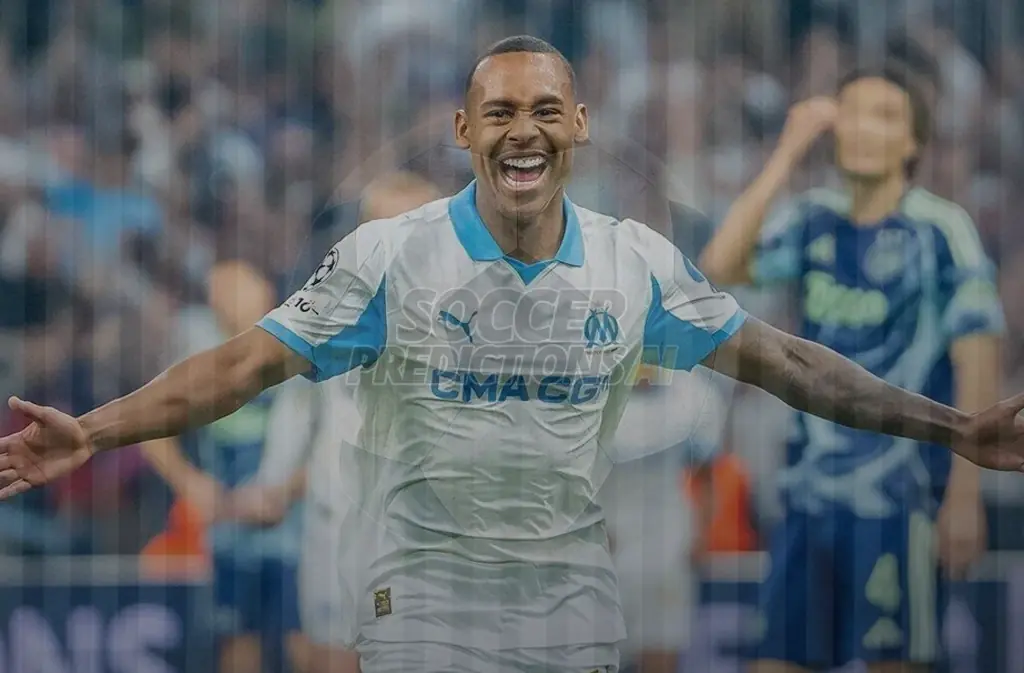
Igor Paixão nearly forced Olympique Marseille to look for a new coach during this summer transfer window. Bruno Génésio made it clear that he would not have accepted the departure of the former Feyenoord player.
Marseille kept Igor Paixao after Bruno Genesio reached breaking point over possible sale
Olympique Marseille came remarkably close to losing not only Igor Paixao during the summer transfer window but potentially coach Bruno Genesio as well, after the French club considered allowing the Brazilian winger to leave for Sunderland. Marseille entered the market under considerable financial pressure and were forced to sanction several important departures, but the possibility of adding Paixao to that list created serious tension behind the scenes. Club president Stephane Richard has now revealed that the situation became so delicate that Marseille were approaching what he described as a breaking point with Genesio, prompting the hierarchy to intervene and ultimately prevent one of the most important players in the squad from leaving.
Marseille financial situation shaped much of their transfer activity throughout the summer. The club had already been forced to part with Mason Greenwood, Quinten Timber, Facundo Medina and Pierre-Emerick Aubameyang, meaning Genesio saw several established members of his squad leave before the season had properly developed. Those departures provided necessary financial relief, but they also reduced the number of experienced and influential players available to the coach. When Sunderland then emerged as a possible destination for Paixao, Marseille were suddenly faced with the prospect of losing another attacking player who had already demonstrated his importance during his first year in French football.
The negotiations surrounding Paixao went far enough for a departure to become a realistic possibility. The former Feyenoord winger appeared to be moving towards Sunderland, and Marseille were seriously considering another sale at a time when the club was attempting to improve its financial position. For Genesio, however, losing Paixao after the other departures was apparently a step too far. Richard explained that although the coach never explicitly threatened to resign, the atmosphere around the discussions became increasingly tense as the possibility of the transfer grew.
"He did not literally blackmail us by saying he would definitely leave if Igor was transferred. But with that move getting closer, we were not very far from a breaking point. That was one of the reasons I fought to make sure Paixao stayed here," Richard said during an appearance on an RMC Sport programme.
The Marseille president comments reveal just how important the Brazilian had become to Genesio plans. The issue was no longer simply whether the club could generate another substantial transfer fee. The hierarchy also had to consider how another major departure would affect the sporting project and, crucially, the relationship with the coach responsible for managing a squad that had already undergone considerable change. The possibility of selling Paixao therefore became a decision with consequences extending well beyond the player himself.
Marseille hierarchy stepped in to stop Paixao departure
Richard indicated that he personally became involved in the effort to keep the winger once it became clear how serious the situation had become. According to the president, Paixao might have been allowed to leave had he not intervened. The final decision ultimately belonged to owner Frank McCourt, who chose to support the sporting argument for keeping the Brazilian rather than approving another outgoing transfer.
"If I had not intervened, he might well have left. In the end, it was owner Frank McCourt decision. He gave the final push," Richard explained. The statement suggests that the debate over Paixao future reached the highest level of the club, with sporting and financial priorities having to be weighed against each other before a definitive decision could be made.
For Marseille, keeping Paixao also represented an important signal after a summer dominated by departures. Selling players because of financial necessity is one thing, but there is always a point at which continued departures begin to weaken the sporting project itself. The club had already lost several recognised figures, and Genesio clearly felt that Paixao needed to remain if Marseille were to preserve sufficient attacking quality and ambition.
The decision to block the transfer effectively changed the Brazilian status inside the squad. Rather than becoming another player sacrificed because of financial pressures, he is now expected to assume an even greater role. RMC Sport described Paixao as one of Marseille key figures following the transfer window, with increased responsibility now resting on a player who only arrived in French football relatively recently.
"He is now a key figure at Marseille, a role the Brazilian will have to embrace," RMC Sport noted when assessing his new position within the team.
Paixao asked to take greater responsibility after major departures
The expectation surrounding Paixao is understandable given the scale of the changes around him. Greenwood, Aubameyang, Timber and Medina were all part of a squad that had significant experience and quality, and replacing the influence of several established players at the same time is rarely straightforward. By keeping Paixao, Marseille retained at least one attacking player who already understands Genesio methods, Ligue 1 and the demands associated with representing a club under constant pressure to compete at the highest possible level.
His first season in France provided evidence of why the coach was so reluctant to lose him. Paixao finished the Ligue 1 campaign with six goals and five assists from 30 appearances, giving him direct involvement in 11 league goals during his first year at the club. Those numbers also came while he was adapting to a new competition and a different footballing environment after his move from Feyenoord.
His contribution was not limited to domestic football. Paixao also scored four times in the Champions League, showing that he could make an impact on the European stage as well. Two of those goals came against Ajax, an opponent familiar to him from his time in the Netherlands. Those performances added to his reputation within Marseille and helped explain why Genesio regarded another summer departure as potentially damaging to the team.
The challenge now is for Paixao to build on that first season and justify the confidence shown by the coach and club hierarchy. Keeping a player after rejecting the possibility of a significant transfer naturally changes expectations. He is no longer simply one attacking option among many; the summer decisions have placed him closer to the centre of the Marseille sporting project, particularly after so many other important players left.
Genesio position influenced key transfer decision
The episode also highlights the influence Genesio has within Marseille. The coach did not formally issue an ultimatum, according to Richard, but the hierarchy understood that continuing with the transfer could seriously damage the relationship between the technical staff and those responsible for the clubs financial decisions. The phrase "breaking point" used by the president illustrates how close the disagreement came to becoming a much larger internal problem.
For a club already dealing with financial difficulties and substantial squad turnover, the prospect of entering the season with uncertainty surrounding the coach would have created another major complication. Marseille therefore had to determine whether the money generated by selling Paixao would outweigh the sporting and institutional consequences of losing a player Genesio clearly considered essential.
The answer was ultimately no. McCourt decision ended the possibility of the move to Sunderland and ensured Paixao remained available to the coach. It also prevented Marseille from having to search for another replacement late in the window, something that could have been particularly difficult after so many other changes had already taken place.
The Brazilian will now be expected to repay that confidence on the pitch. With a number of prominent players no longer at the club, Marseille need those who remained to assume greater responsibility both in terms of performances and leadership within the sporting structure. Paixao first-season numbers provide a solid base, but the new campaign will bring greater expectations precisely because the club fought to keep him.
Financial problems forced Marseille into difficult summer
The wider context remains Marseille financial position. The club did not enter the summer simply looking to refresh the squad voluntarily. Several sales became necessary, creating a transfer window in which the sporting department repeatedly had to balance the need to raise money against the danger of weakening the team too much. Greenwood, Timber, Medina and Aubameyang were all allowed to leave as part of that process, and Paixao came close to following them.
Such a level of turnover inevitably places pressure on a coach, particularly when players departing are not all easily replaceable. Genesio therefore had to assess not only the individual quality of Paixao but also what another exit would mean after the cumulative effect of previous sales. By the time Sunderland interest became serious, Marseille had apparently reached the limit of what the coach felt the squad could absorb without threatening its competitive level.
That explains why the Paixao situation developed into much more than an ordinary transfer negotiation. For the financial department, another sale could potentially help the clubs accounts. For Genesio, it represented the possible loss of one of the players around whom he expected to build his attacking structure. For McCourt and Richard, the challenge was deciding which consideration had to take priority.
The final outcome preserved Paixao place in the squad and also avoided the possibility of a far more damaging confrontation with the coach. Marseille may still have significant financial issues to manage, but the decision suggests there are limits to how far the club is willing to weaken the sporting project in order to generate transfer income.
Paris FC match brings attention back to the pitch
With the transfer market now closed, Marseille can finally shift their focus away from negotiations and towards results. Their upcoming meeting with Paris FC on September 6 gives the team another opportunity to demonstrate how the reshaped squad is developing after such a turbulent summer. For Genesio, the priority will be ensuring that the players who remained are fully committed to the project and capable of compensating for the quality that left during the window.
Paixao will naturally be one of the players under particular scrutiny. The Brazilian knows that the coach fought to keep him and that the club hierarchy ultimately decided his sporting value was too important to sacrifice. That places additional responsibility on him, but it also represents a considerable vote of confidence from Marseille.
His previous numbers suggest he is capable of assuming a larger role. Six Ligue 1 goals, five assists and four Champions League goals in his first season established him as an important contributor without necessarily making him the undisputed central figure of the team. Following the summer departures, that status has changed. Marseille now need him to become more consistently decisive and to provide the attacking influence that Genesio was determined not to lose.
The story of Marseille summer therefore ended very differently from how it might have done. Paixao appeared to be heading towards Sunderland, another major sale seemed close and the clubs financial situation pointed towards an exit. Instead, resistance from the sporting side of the club changed the outcome. Richard intervened, McCourt made the final decision and the Brazilian stayed.
What emerged afterwards was the revelation that the consequences could have been far greater than simply losing a winger. According to the Marseille president, the club was approaching a breaking point with Genesio as the transfer became increasingly likely. By keeping Paixao, Marseille did more than retain one of their most productive attacking players. They also protected the relationship with their coach at the end of a summer in which he had already watched several important members of his squad walk out of the door.
The responsibility now shifts to Paixao himself. After 11 direct goal contributions in 30 Ligue 1 appearances and another four goals in the Champions League during his debut season, he has already shown what he can offer. Marseille decision to reject his departure means they now expect even more. With the financial turmoil of the summer behind them and several established stars gone, the former Feyenoord winger has become one of the players Genesio will rely on most heavily as Marseille attempt to remain competitive through a demanding season.