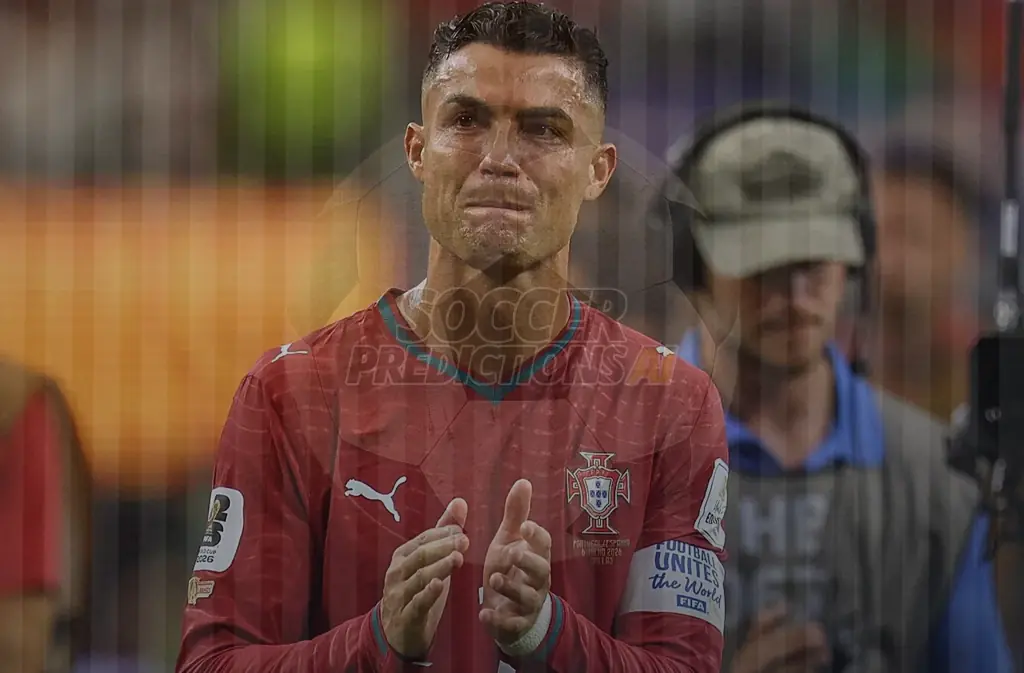
Cristiano Ronaldo announces his retirement from Portugal after 23 years, ending a historic international career with 234 appearances, 146 goals and three major trophies.
Cristiano Ronaldo Announces Portugal Retirement After 23 Years, 234 Appearances and 146 Goals
Cristiano Ronaldo has announced his retirement from international football, bringing an extraordinary 23-year career with Portugal to an end at the age of 41. The legendary forward confirmed his decision on Thursday, November 5, 2026, through an emotional video published on his social media accounts, just one day before national team manager Jorge Jesus was due to announce his squad for the upcoming UEFA Nations League fixtures. Ronaldo leaves the national team having made 234 appearances and scored 146 goals, both world records in men's international football, while also captaining Portugal to three major trophies. His departure marks the end of a remarkable era for Portuguese football and raises important questions about how the national team will move forward without the player who has represented its ambitions for more than two decades.
The announcement was accompanied by a lengthy farewell message in which Ronaldo reflected on the victories, disappointments, sacrifices and relationships that shaped his international career. Rather than concentrating exclusively on the records he accumulated, the former Portugal captain placed particular emphasis on the emotional connection he developed with supporters throughout the country and Portuguese communities around the world. He explained that wearing the national team's number seven shirt had always represented a responsibility greater than his individual achievements and that the time had arrived to pass that responsibility to another generation. Although the decision was clearly difficult, Ronaldo insisted that he was leaving with pride in everything he had accomplished and the conviction that he had given his best for Portugal.
The timing of his retirement is particularly significant because it follows a difficult period in his relationship with the national team following the 2026 World Cup. Ronaldo had left the Portugal training camp in Denmark on September 30 after a disagreement with Jorge Jesus, who replaced Roberto Martínez as national team manager following the tournament. The incident led to a 30-day suspension imposed by the Portuguese Football Federation, although the disciplinary sanction had already expired before the announcement of the next squad. Ronaldo was therefore eligible to return to international duty, but instead chose to conclude a journey that began in August 2003 and included six European Championships, six World Cups and three major international titles.
Cristiano Ronaldo Delivers Emotional Farewell to Portuguese Supporters
In his farewell video, Ronaldo addressed Portuguese supporters directly, explaining that the national team shirt had never belonged to him alone despite the extraordinary length of time he had worn it. The forward acknowledged that deciding to retire was not simply a sporting matter, because representing Portugal had become deeply connected to his personal identity and the experiences that defined his career. He recalled the responsibility of carrying the national colours into stadiums across the world and the pride he felt whenever he stood alongside his teammates before an international match. After 23 years, however, he believed the moment had arrived to step away and allow the next generation of players to create its own history.
One of the strongest themes in Ronaldo's message was the importance of the supporters who accompanied him throughout his international journey. He spoke about Portuguese families living abroad who found a connection with their homeland whenever the national team played, as well as millions of people he had never met personally but who had become part of his story. For Ronaldo, the significance of football extended beyond goals and trophies because of its ability to bring people together during moments of celebration and disappointment. His reflections suggested that the emotional experiences shared with supporters had ultimately become just as meaningful as the individual records that established him among the most successful players in international football.
The former captain also acknowledged that his career had included mistakes, painful defeats and moments when he was unable to deliver the success that Portuguese supporters expected. His determination to win had been a defining characteristic throughout his career, but the farewell message demonstrated an appreciation of the difficulties that accompanied those ambitions. Ronaldo emphasised that he had always attempted to exceed his limits and improve as a footballer, even during periods when results were disappointing or his performances attracted criticism. Looking back on those experiences, he expressed particular pride in never losing his commitment to representing Portugal, regardless of the circumstances surrounding individual matches or tournaments.
Ronaldo also dedicated part of the message to his former teammates, coaches, medical staff and the many people who worked behind the scenes during his time with the national team. He recognised that the achievements associated with his name depended on the contributions of countless individuals who supported the squad throughout the years. His family received a particularly emotional tribute, with the forward acknowledging the sacrifices required by a career that involved frequent international travel and prolonged periods away from home. The message offered a personal perspective on the responsibilities of representing a country, reminding supporters that the achievements celebrated on the pitch were supported by relationships and sacrifices beyond the public view.
Perhaps the most memorable passage concerned the national anthem, which Ronaldo described as an experience he would carry with him for the rest of his life. He reflected on standing alongside his teammates and looking towards supporters of different ages and backgrounds who had gathered to support Portugal. In those moments, he suggested, the divisions that normally exist between people become less important than their shared identity and affection for the national team. His farewell concluded with gratitude to everyone who had supported him since childhood, bringing together the ambitions of a young boy growing up in Madeira and the achievements of a footballer who eventually became one of the most recognisable athletes in the world.
From His Portugal Debut in 2003 to Becoming a National Icon
Ronaldo's international journey began on August 20, 2003, when he made his senior debut in a friendly against Kazakhstan at the Estádio Municipal de Chaves. Portugal were coached by Luiz Felipe Scolari, who introduced the 18-year-old forward at half-time in place of Luís Figo as the national team secured a 1-0 victory. At that stage, Ronaldo was still at the beginning of a professional career that would eventually take him to the highest level of world football, having recently attracted international attention through his move from Sporting CP to Manchester United. Few could have predicted that the teenager would go on to represent his country for another 23 years and establish records that remain unmatched in men's international football.
His first major international tournament arrived less than a year later when Portugal hosted the 2004 European Championship. Ronaldo quickly became an important member of a squad featuring experienced players such as Figo, Rui Costa and Deco, contributing to an impressive campaign that took the hosts all the way to the final. However, the tournament ended in disappointment when Greece defeated Portugal 1-0 in Lisbon, denying the young forward what would have been an extraordinary achievement at the beginning of his international career. The defeat became one of the defining disappointments of his early years, particularly because Portugal had entered the competition with considerable expectations and enjoyed the advantage of playing in front of its own supporters.
The following years established Ronaldo as the central figure of a Portuguese team attempting to compete consistently against Europe's strongest nations. He participated in the 2006 World Cup, helping Portugal reach the semi-finals, and continued representing the country through successive European Championships and World Cups as his reputation grew at club level. His responsibilities changed as he developed from an exciting young winger into one of the most productive goalscorers in football history, but his commitment to international competition remained a consistent feature of his career. The national team gradually became increasingly associated with his leadership, goals and determination to achieve a level of success that previous generations had found difficult to secure.
Across those 23 years, Ronaldo represented Portugal in six European Championship tournaments and six World Cups, an extraordinary record of longevity that required him to maintain his physical condition and competitive standards well into his forties. His participation in the 2026 World Cup extended an international journey that had begun when many of his final teammates were still young children. The length of that career is particularly remarkable given the physical demands of modern football, where maintaining a place in an elite national team requires consistent performances against younger opponents. Ronaldo's ability to adapt his playing style and remain involved across several generations became one of the defining features of his international legacy.
Euro 2016 Remains the Defining Triumph of His Portugal Career
Although Ronaldo's international career produced an extraordinary collection of individual achievements, the greatest collective moment arrived at Euro 2016 in France. Portugal entered the tournament hoping to compete successfully against the continent's leading teams, but few expected Fernando Santos and his players to emerge as champions after a campaign marked by narrow results and demanding knockout encounters. Ronaldo played an important role in helping the team progress, contributing goals and leadership as Portugal overcame difficult opponents before reaching the final against hosts France. The occasion offered an opportunity to achieve the international success that had eluded him since the painful defeat against Greece in 2004.
The final in Paris became one of the most emotional matches of Ronaldo's career, although not in the manner he had anticipated. An injury sustained during the opening stages forced the Portugal captain to leave the pitch, with the forward visibly distressed at being unable to continue in the biggest match of his international career. He remained involved emotionally from the sidelines as his teammates defended against France and attempted to find a winning goal. The decisive moment eventually arrived in extra time when Éder scored from outside the penalty area, securing a historic 1-0 victory and giving Portugal its first major international trophy.
For Ronaldo, the triumph represented the achievement of a lifelong ambition and transformed the way his international career would be remembered. Although he had already won numerous trophies at club level, leading Portugal to a major international title carried a different emotional significance because it fulfilled an objective shared by generations of Portuguese football supporters. The image of Ronaldo celebrating with his teammates after the final whistle became an enduring symbol of the country's greatest football achievement at that time. It also demonstrated that the national team's success depended on a collective effort, with the captain contributing throughout the tournament even though he was unable to complete the decisive match.
Portugal added two further major trophies during Ronaldo's international career by winning the UEFA Nations League in 2019 and 2025. The inaugural Nations League triumph came on home soil, providing another opportunity for the captain to celebrate an international title with Portuguese supporters. Six years later, Portugal secured a second title in the competition, reinforcing its position among Europe's leading national teams and adding another important achievement to Ronaldo's remarkable record. Those victories ensured that he would retire with three senior international trophies, a collection that reflected both his longevity and the progress achieved by Portuguese football during his time with the national team.
World Records That Changed the History of International Football
Ronaldo leaves the Portugal national team with 234 senior appearances and 146 goals, two extraordinary records that place him at the top of the all-time rankings in men's international football. His achievements were accumulated across more than two decades, during which he consistently found ways to remain productive despite changes in coaches, teammates and tactical systems. The forward became the first male player to reach 200 international appearances and continued extending his record well beyond that milestone, demonstrating a level of longevity rarely witnessed at the highest level. His goalscoring record is equally remarkable, reflecting an ability to influence matches through different stages of his career and against opponents from across the world.
His performances at major international tournaments also produced several historic achievements. Ronaldo became the only male footballer to score in six different World Cups, finding the net at every edition between 2006 and 2026. He finished his World Cup career with 11 goals, including three during the 2026 tournament in North America, where he continued contributing despite being 41 years old. His most productive World Cup came in Russia in 2018, when he scored four goals, including a memorable hat-trick against Spain during the group stage. Although he never succeeded in winning the competition, his presence across six tournaments established a remarkable record of consistency and endurance.
Ronaldo also holds the record for the most goals scored in European Championship finals, with 14, adding another distinction to his extraordinary collection of international achievements. Throughout his career, he demonstrated a particular ability to produce important goals during qualification campaigns, helping Portugal secure places at successive major tournaments. He also scored ten international hat-tricks, another indication of his productivity and capacity to dominate matches through individual performances. These records reflect more than natural talent, illustrating the determination and physical preparation required to remain competitive across different generations of international football.
However, the significance of Ronaldo's international career cannot be measured exclusively through statistics. When he made his debut in 2003, Portugal had never won a major senior international trophy, despite producing several outstanding generations of footballers. By the time he announced his retirement, the country had won a European Championship and two Nations League titles, establishing itself as a consistent contender in international competitions. Ronaldo was not solely responsible for that transformation, but his leadership, goals and international recognition played a central role in raising expectations surrounding Portuguese football. His career helped reinforce the belief that Portugal could compete successfully against the strongest national teams in the world.
Disagreement With Jorge Jesus Preceded International Retirement
The final weeks of Ronaldo's international career were complicated by a disagreement with national team manager Jorge Jesus, who took charge of Portugal following the 2026 World Cup. Tensions became public during the September international period, particularly after Ronaldo was not introduced during the Nations League encounter against Norway. The forward subsequently expressed dissatisfaction with the circumstances surrounding his potential involvement, explaining that he believed an understanding with the coaching staff had not been respected. The situation developed into a public controversy that attracted considerable attention because of Ronaldo's status as Portugal's long-serving captain and most experienced international player.
On September 30, Ronaldo left the national team training camp in Denmark before Portugal's scheduled Nations League encounter, a decision that led to disciplinary proceedings by the Portuguese Football Federation. The federation subsequently imposed a 30-day suspension and a fine of €255 after determining that he had left the international gathering without sufficient justification under its regulations. The sanction began on October 1 and expired on October 30, meaning Ronaldo was eligible to return when the next squad was selected. His decision to retire therefore came after the disciplinary matter had been resolved, although the disagreement remained an important part of the circumstances surrounding his final weeks as an international player.
The situation also highlighted the challenges associated with managing the final stages of an exceptional international career. Ronaldo had spent more than two decades as one of Portugal's most influential players, regularly occupying a central attacking role and carrying the expectations associated with his remarkable goalscoring record. As the national team moved into a new coaching cycle, questions surrounding his playing time and responsibilities became increasingly prominent. Those discussions are familiar when experienced players approach the end of their careers, but Ronaldo's extraordinary achievements and public profile ensured that the situation received considerably greater attention than an ordinary selection decision.
Although the disagreement with Jesus formed part of the immediate background to the retirement announcement, Ronaldo's farewell message concentrated primarily on gratitude and the experiences accumulated throughout his career. He did not use the occasion to revisit the controversy in detail, instead choosing to celebrate the relationships developed with teammates, supporters and the many people who had contributed to his international journey. The decision brought clarity to Portugal's future selection plans, allowing Jesus to prepare for the upcoming Nations League matches without uncertainty surrounding the availability of the country's most experienced player.
Final Appearance Against Wales and Last Goal at the 2026 World Cup
Ronaldo's final appearance for Portugal came on September 24, 2026, when the national team secured a 1-0 victory over Wales in the opening round of UEFA Nations League Group A4. The forward started the encounter and played 67 minutes before being substituted, an appearance that ultimately brought his extraordinary international record to 234 matches. At the time, the fixture was not presented as his official farewell, and there was no indication that it would become the final chapter of his playing career with Portugal. The subsequent disagreement during the international gathering in Denmark and the retirement announcement in November meant that his last appearance took place without the ceremonial occasion normally associated with the departure of such an influential player.
His final international goal arrived during the 2026 World Cup, when Portugal defeated Croatia 2-1 in the round of 32 in Toronto. Ronaldo converted a penalty during the encounter, adding another goal to his extraordinary international record and extending his historic achievement of scoring at six different World Cups. Portugal's campaign eventually ended against Spain in the round of 16, denying the captain another opportunity to compete for the one major international trophy that remained absent from his collection. Nevertheless, the tournament provided a fitting illustration of his determination to continue competing, as he remained involved in major international football at an age when most players have already concluded their careers.
The fact that Ronaldo's international career ended without an official farewell match has inevitably attracted attention, particularly given the length of his service and the significance of his achievements. Supporters who followed his journey from the early years under Scolari through the European Championship triumph and subsequent Nations League victories may have expected a more public conclusion. However, the retirement announcement provided an emotional opportunity for Ronaldo to express his appreciation directly to the country, even without the atmosphere of a stadium filled with supporters. Whether a special tribute eventually allows him to return to the pitch in a ceremonial capacity remains a matter for the federation and the player.
Portuguese Football Federation Plans Tribute to Its Former Captain
The Portuguese Football Federation responded to Ronaldo's announcement with a message of gratitude, recognising the remarkable contribution he made throughout his 23 years with the national team. The organisation highlighted his leadership, professionalism and influence on successive generations of Portuguese players, describing his achievements as an important part of the country's football history. The federation also emphasised that his legacy extends beyond the records and trophies accumulated during his career, acknowledging the role he played in inspiring young footballers and strengthening the international reputation of Portuguese football.
Importantly, the federation expressed its intention to organise a tribute that would allow supporters to recognise Ronaldo's achievements in an appropriate setting. Although no official date or venue has been confirmed, the proposed event would provide an opportunity for the Portuguese public to celebrate a player who represented the national team longer than anyone before him. Such an occasion would carry particular significance because Ronaldo's final competitive appearance took place before his retirement had been announced. The federation's response suggests that his departure will not be allowed to pass without a public acknowledgement of the contribution he made over more than two decades.
The announcement also creates a new situation for Jorge Jesus, who must now prepare Portugal's squad without the country's record appearance holder and leading goalscorer. The national team possesses several established attacking players capable of assuming greater responsibilities, but replacing Ronaldo's experience and influence will require more than simply selecting another centre-forward. His presence had been a constant feature of Portugal's international identity since 2003, and successive generations of teammates had developed their careers alongside him. The transition will therefore involve adjustments in leadership, attacking organisation and the expectations surrounding players who are now required to assume more prominent roles.
At the same time, Ronaldo's retirement creates opportunities for younger players to establish themselves within the national team. Portugal has continued producing technically gifted footballers capable of competing at leading European clubs, providing the coaching staff with several possible approaches for the next international cycle. The challenge will be to develop a successful collective identity without relying on the goalscoring record and experience of a player who dominated the national team's attacking responsibilities for so many years. Ronaldo's farewell message explicitly encouraged the next generation to pursue its ambitions and continue believing that Portugal can achieve further success on the international stage.
Ronaldo Will Continue His Club Career With Al Nassr
Although his international career has ended, Ronaldo has not announced his retirement from professional football and will continue representing Saudi Arabian club Al Nassr. The distinction is important because his decision concerns only his availability for Portugal, allowing him to concentrate on the remaining years of his club career. At 41, the forward remains determined to compete and pursue further goalscoring achievements, including the extraordinary milestone of 1,000 official senior career goals. According to figures reported at the time of his international retirement, Ronaldo has scored 985 goals for club and country, leaving him within reach of a target that has attracted considerable attention during the later stages of his career.
Continuing at club level will allow Ronaldo to maintain his involvement in competitive football without the additional travel and physical demands associated with international gatherings. During his career, representing Portugal involved regular journeys across Europe and other continents, particularly during qualification campaigns and major tournaments. Removing those commitments may provide greater flexibility in managing his fitness and recovery while continuing to compete for Al Nassr. However, his long-term plans beyond the immediate club season remain a personal matter, and the international retirement announcement did not establish a definitive date for the conclusion of his professional career.
For Portuguese supporters, the knowledge that Ronaldo will continue playing club football does not diminish the significance of his departure from the national team. His international performances carried a particular emotional importance because they connected the player with supporters who followed Portugal regardless of club affiliations. The number seven shirt became closely associated with his achievements, celebrations and determination to succeed, creating memories that will remain an important part of Portuguese football history. Although another player will eventually wear that number, Ronaldo's contribution has established a legacy that extends well beyond the individual statistics associated with his name.
A Remarkable Chapter in Portuguese Football Comes to an End
Cristiano Ronaldo's retirement represents one of the most significant moments in the modern history of Portuguese football. From his debut as an 18-year-old against Kazakhstan to his final appearance at the age of 41, he remained an almost constant presence in the national team, witnessing changes in generations, coaching staffs and competitive expectations. His career included the disappointment of the Euro 2004 final, the celebrations of Euro 2016, two Nations League triumphs and countless moments that brought Portuguese supporters together. The records of 234 appearances and 146 goals provide a remarkable statistical summary, but they cannot fully capture the emotional significance of a journey that lasted more than two decades.
His farewell message reflected that wider perspective, placing relationships, national identity and shared experiences alongside the trophies and individual achievements that defined his professional career. Ronaldo acknowledged the sacrifices made by his family and the contributions of teammates and staff, while reserving particular gratitude for the supporters who accompanied him throughout the years. The message also demonstrated an understanding that his records will eventually be challenged and that new generations must be given the opportunity to establish their own achievements. After spending so much of his life attempting to become the best player in the world, he concluded that representing Portugal had been one of the greatest honours of his career.
Portugal must now prepare for a future without the player who became its most recognisable footballing figure, while Ronaldo turns his attention towards the remaining ambitions of his club career. The circumstances surrounding his departure may not have provided the farewell many supporters expected, but they do not diminish the significance of his achievements or the contribution he made to Portuguese football. His international journey ends with three major trophies, two historic world records and memories shared by millions of supporters across several generations. For Ronaldo, the national team shirt may now belong to the next generation, but the pride of having worn it for 23 years will remain a defining part of his extraordinary career.