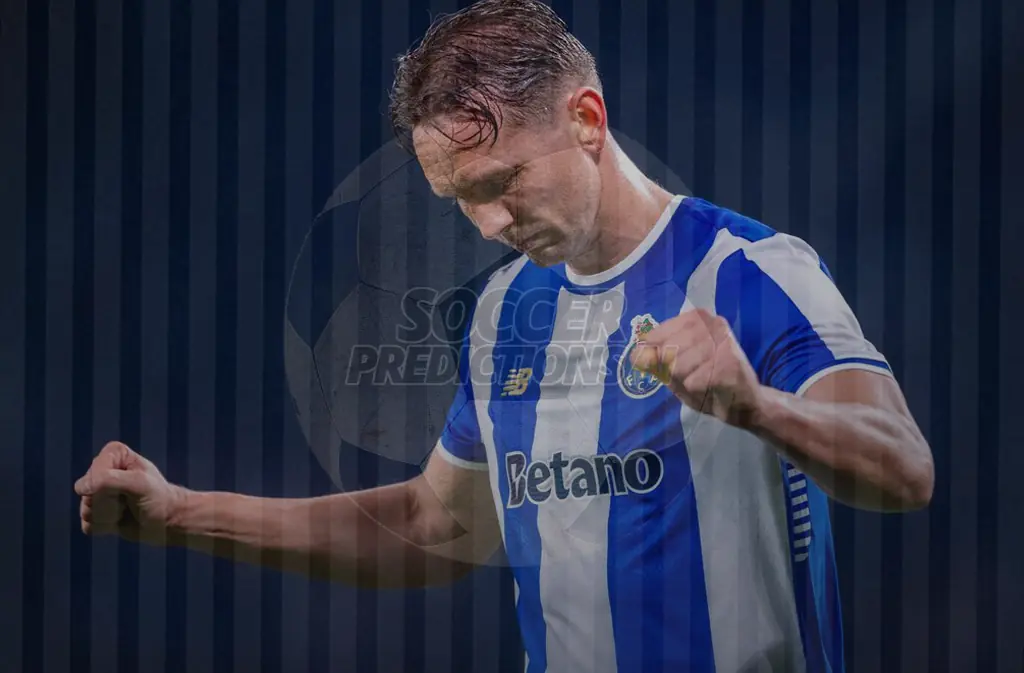
Luuk de Jong is nearing the end of his rehabilitation after a serious knee injury and insists he is not ready to retire, with all options still open for his future.
Luuk de Jong nears end of rehabilitation after difficult Porto spell
Luuk de Jong says he is approaching the final stage of his rehabilitation and remains determined to continue his playing career after a serious knee injury brought a frustrating end to his spell at Porto. The experienced striker, speaking in an interview with PSV TV, explained that his recovery is progressing well and that he is now waiting calmly to see what opportunities may come next.
De Jong joined Porto with the intention of making an immediate impact, with coach Francesco Farioli strongly supporting the move, but his plans were disrupted by the injury. What was supposed to be a new challenge instead became a lengthy recovery process and forced the Dutch forward to confront questions about his fitness, his future and whether he would be able to return to the level he had reached throughout a long career.
“I feel good and my knee is doing well too,” De Jong said. “I am in the final stage of my rehabilitation. Now I am calmly waiting to see what comes next.”
The striker admitted that the injury was particularly difficult to accept because of the timing. He had arrived in Portugal looking forward to a fresh experience and hoping to contribute to Porto on the pitch, only for that opportunity to disappear before he could properly establish himself.
“It was frustrating to get injured because you start a new adventure hoping to make an impact,” he said. “Of course, this was not what I had hoped for, although I tried to stay positive.”
Injury changed the course of Porto adventure
Rather than distancing himself from the team during his rehabilitation, De Jong chose to remain closely involved with the Porto squad. Even though he could no longer help during matches, he wanted to continue supporting his teammates and remain part of the group as much as possible.
“I remained with the team so I could support them wherever possible,” De Jong explained. “This could also have happened at the beginning of my career, so perhaps it is ‘better’ that it happened now.”
His words reflected the perspective of a player who has experienced almost every stage of a professional career. De Jong acknowledged that such an injury could have happened at any time, and although the timing was far from ideal, dealing with it at this stage allowed him to approach the situation with the experience accumulated over many years at the highest level.
The seriousness of the diagnosis nevertheless created uncertainty. Once doctors confirmed the extent of the injury, De Jong knew immediately that the remainder of his season was over. Beyond the immediate disappointment, he also had to consider the longer-term questions that naturally follow a major physical setback.
“When you receive the doctors diagnosis, a lot goes through your mind,” he said. “You know you are definitely not going to play again that season, but you also start wondering whether you will come back properly and what will happen afterwards.”
Despite those doubts, De Jong insists he never reached the conclusion that retirement was inevitable.
“I do not feel that this is the end of my career.”
De Jong remains determined to play on
That statement is perhaps the clearest indication of his current mindset. The forward is not treating rehabilitation as preparation for retirement, but as a route back to football. With his knee improving and the final stage of recovery now under way, his focus has shifted from simply overcoming the injury towards deciding where the next chapter of his career might take place.
De Jong has not committed himself to a particular destination and made clear that he is keeping every possibility open. His comments suggest he is prepared to assess his situation once the rehabilitation process has been completed rather than rushing into a decision while he is still recovering.
The injury also gave him more time to reflect on what he wants from the later stages of his career. He described the period at Porto positively despite the disappointment of not being able to contribute as much as he had originally hoped, but acknowledged that being sidelined changed the way he thought about his future.
“Porto wanted to continue together,” De Jong said. “It was a great adventure, but because of the injury I also took some time to think.”
That reflection has coincided with a return to the Netherlands, where the striker is now able to spend more time close to family and friends while waiting to see what comes next.
“It is also nice to be back home with family and friends and to see what comes next. All options are still open.”
Porto support made long recovery easier
De Jong spoke warmly about the way Porto treated him throughout the difficult period. Although he underwent surgery in the Netherlands, the Portuguese club remained involved in the rehabilitation process and ensured that he continued to receive support away from Portugal.
“They were very supportive and really thought along with me,” he said. “I had the operation in the Netherlands and at every appointment I attended, a physiotherapist came with me. That was really helpful.”
The striker also highlighted the importance of remaining connected to the squad during such a long recovery. Rehabilitation from a serious injury can be isolating, especially when a player is unable to train normally or participate in matches, but De Jong said being around his teammates helped make the process easier.
“Because the recovery took a long time, it was quite difficult, but being at the club and around the other players made it easier than if I had been doing everything somewhere externally.”
That support appears to have left De Jong with positive feelings towards Porto despite the fact that the sporting side of the move did not develop as planned. He arrived with the backing of Farioli and with expectations of playing an important role, but circumstances prevented that from happening.
Instead of looking back on the experience entirely through the lens of disappointment, De Jong described it as a worthwhile chapter, even if the injury forced him into a very different role from the one he expected.
PSV remains a major part of his career
De Jong spoke to PSV TV because of his long association with the Eindhoven club, where he produced some of the most productive years of his career. His record at PSV underlines the scale of his contribution and explains why he remains such a significant figure around the club.
Across his time in the shirt of the Dutch champions, De Jong made 338 appearances, scoring 186 goals and providing 98 assists. Those numbers reflect both his consistency and his importance as a focal point in attack over a long period.
His contribution was never limited to goals alone. The assist total also highlights the role he played in linking attacks and bringing teammates into the game, helping him become one of the defining players of PSV during his time at the club.
That history also explains why an update on his rehabilitation carries particular interest in the Netherlands. Even after leaving PSV for another challenge, De Jong continues to be closely associated with the club where he spent such a significant part of his professional career.
The interview therefore offered both a medical update and a broader reflection on where his career now stands. De Jong is no longer dealing with the immediate shock of the injury. Instead, he has reached the point where a return to training and eventually competitive football is becoming realistic again.
Future remains open
For now, there is no confirmed next club or definitive career plan. De Jong appears comfortable with that uncertainty. His immediate priority remains completing rehabilitation properly and making sure his knee is ready for the demands of professional football.
Only once that process is finished will the striker need to make a decision about what comes next. His insistence that “all options are still open” leaves room for several possibilities, while also making clear that retirement is not currently the preferred outcome.
The fact that Porto had wanted to continue with him demonstrates that there was still sporting interest in extending the relationship, but the injury created an opportunity for De Jong to reassess his situation. After such a long period away from competitive football, he appears determined to choose his next step carefully.
His experience at Porto may have been frustrating, but it does not appear to have diminished his desire to continue. Instead, the recovery period has become another challenge in a career that has already included hundreds of matches, major moves and long spells of success.
For De Jong, the next milestone is no longer simply completing another rehabilitation session. It is returning to a point where he can train fully, compete again and decide which opportunity makes the most sense.
The uncertainty surrounding his future therefore comes with a more positive tone than it did when the injury was first diagnosed. At that stage, the striker was confronting the end of his season and wondering whether he would recover properly. Now, he says his knee feels good and that the final phase of rehabilitation has begun.
There is still no date for his return to competitive football, but the direction is clear. De Jong believes he still has something to offer, does not consider his career finished and is prepared to wait for the right opportunity once his recovery is complete.
After a Porto adventure interrupted by injury, the experienced striker is therefore approaching another important crossroads. He remains grateful for the support he received in Portugal, proud of the career he built at PSV and determined not to allow one serious setback to decide when his time as a professional footballer should end.