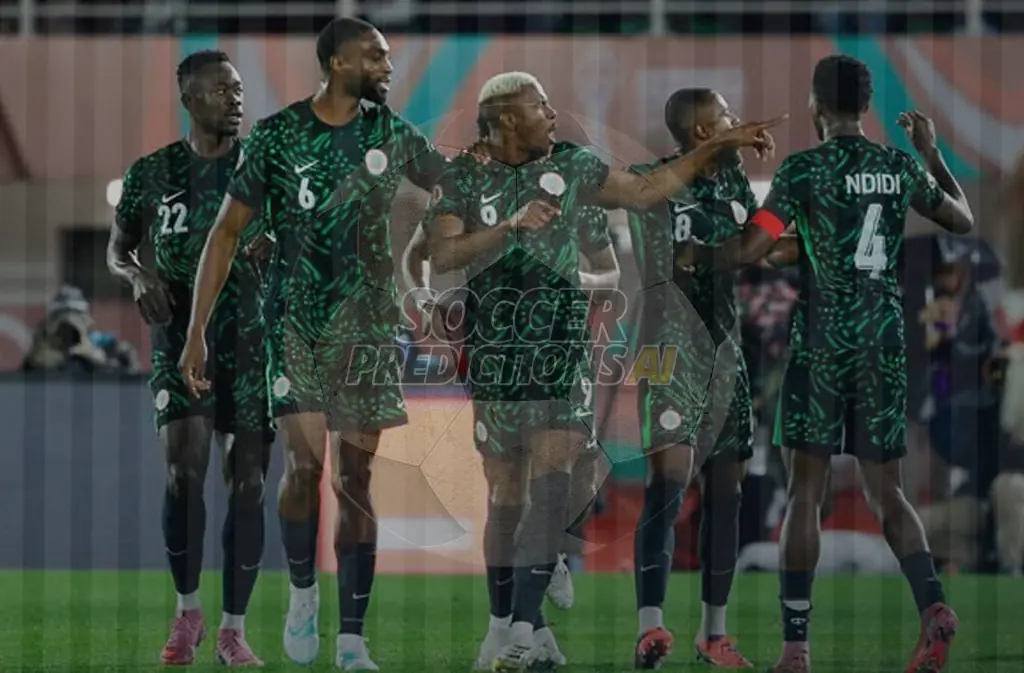
Nigeria have had a turbulent build-up to Saturday’s Africa Cup of Nations quarter-final against Algeria. The squad are threatening to boycott training and may even refuse to travel to Marrakech unless they receive the promised bonuses.
Nigeria’s build-up to Saturday’s Africa Cup of Nations quarter-final against Algeria has been overshadowed by a growing dispute over unpaid bonuses, creating a tense atmosphere at precisely the moment the Super Eagles should be fully focused on their biggest game of the tournament so far.
The match is scheduled for 17:00 on 10-01-2026 in Marrakech, but there is now uncertainty over whether the squad’s preparations will proceed normally, and in the most extreme scenario, whether the team will travel as planned if the financial issue is not resolved.
According to reports from within the Nigerian camp, the players believe clear agreements were reached with the Nigerian Football Federation before the tournament regarding win bonuses. Nigeria have since delivered on the pitch, recording 4 victories across the group stage and the round of 16, yet the promised payments are said to be still outstanding. The players’ position, as outlined by those close to the situation, is straightforward: commitments were made, results were achieved, and the agreed rewards should follow without delay.
The threat of a boycott is not limited to symbolic complaints. The squad are reported to have considered refusing to train on Thursday if the federation did not move quickly to settle the matter. It remains unclear whether that threat was carried out, but the fact it was raised at all highlights the seriousness of the standoff. In tournament football, routine and rhythm matter. Training sessions are not just tactical rehearsals, they are also where the staff manage physical loads, minor injuries, recovery plans, and the psychological tempo of the group. Any disruption, even for a day, risks undermining cohesion and sharpening the sense that the team is being pulled in different directions.
The travel angle is even more sensitive. Suggesting the team might not travel to Marrakech is an escalation that clubs and federations typically treat as a red line, because it brings reputational damage and potential sporting consequences. Even if the intent is to apply pressure rather than follow through, it places organisers, coaches, and senior players into a difficult position, especially so close to kick-off. It also shifts the narrative away from football and toward crisis management, creating distractions that opponents can avoid.
For Nigeria, this is not occurring in a vacuum. The country’s national team has experienced similar tension in the recent past, including a dispute over bonuses ahead of the World Cup qualification play-offs against DR Congo, a tie Nigeria ultimately lost. That earlier conflict matters because it shapes trust. When players feel a problem is repeating itself, they are more likely to view it as structural rather than accidental. From that perspective, the current situation is not just about one set of payments. It becomes about whether the federation is seen as reliable and whether the squad believes it must apply public pressure to enforce agreements.
This is also why these disputes can become especially volatile during international tournaments. Players are away from their clubs, living in a high-intensity environment where everything is magnified. Small issues can become major ones because the margin for error is tiny and the emotional state of the group can swing quickly. At the same time, players often feel these windows are rare and precious. A strong Africa Cup run can define careers, boost market value, and create national pride. When off-field issues intrude, the sense of wasted opportunity can fuel frustration.
On the sporting side, the quarter-final against Algeria is a demanding assignment regardless of the off-field turmoil. Knockout football reduces the room for correction. A slow start, a momentary lapse, or a loss of concentration can end the campaign immediately. Preparation becomes even more critical when the opponent is tactically disciplined and experienced in tournament settings. Nigeria’s strength, traditionally, is athleticism, pace, and the ability to create decisive moments through individual quality. But to translate those strengths into a semi-final place, the team needs calm, clarity, and full alignment between staff and squad.
That is where the timing of the dispute is so damaging. Nigeria’s coaching staff will likely be trying to finalise a plan for controlling Algeria’s key zones, managing transitions, and choosing the right balance between aggression and security. Those decisions depend on training intensity, focus in video sessions, and a stable environment. If the camp is instead dominated by meetings, negotiations, and uncertainty about money, the mental energy that should go into match preparation is inevitably diluted.
The mention of Victor Osimhen adds another layer to the sense of turbulence. The reports do not detail the exact nature of the incident, but the key point is that Nigeria’s headline star has also been linked to controversy during the tournament, adding to the feeling of instability around the group. When a team’s biggest player becomes part of a broader narrative of unrest, it can amplify pressure on the squad, because media attention intensifies and internal issues become harder to contain.
From the federation’s perspective, resolving the matter quickly is likely the only practical route if the priority is sporting success. Even if there are administrative explanations, timing is everything in tournament football. A delay that might be manageable in a normal international window becomes far more explosive when the team is winning matches and approaching a quarter-final. The optics also matter. A squad that feels supported and rewarded is more likely to respond with unity. A squad that feels ignored or taken for granted is more likely to fracture into factions, even if everyone still wants to win.
For Nigeria’s players, there is also a strategic calculation. Boycotting training or refusing to travel is a powerful threat, but it comes with risks, including backlash from supporters who may prioritise national pride over internal disputes. Many fans expect players to compartmentalise and deliver regardless of politics. Players, on the other hand, often view bonus agreements as part of professional respect. When these two perspectives collide, the public debate can become harsh and emotional, particularly if the team is eliminated.
Ultimately, the immediate question is whether the issue is settled before the squad’s final preparation steps for Saturday. If it is resolved, Nigeria can attempt to reset the mood quickly and refocus on football. If it is not, the quarter-final becomes not only a test of tactical quality but a test of professionalism, unity, and emotional control under pressure.